Subscribe to OSXDaily

Subscribe to RSS Subscribe to Twitter Feed Follow on Facebook Subscribe to eMail Updates

Shared on Facebook

Shop at Amazon

Ad

OSXDaily on Facebook

Search wireless

Stop iPhone Pop-Ups Asking to Join Wi-Fi Networks

Apr 7, 2012 - Leave a Comment

Stop Wi-Fi Popup Alerts on iPhone

Annoyed by those persistent wi-fi network popups that show up on the iPhone screen every time a wireless network is in range? You can disable the wi-fi alerts completely by preventing the iPhone from searching for unknown networks, this has no effect on the regular cellular internet connection or accepted wireless networks, here’s how to do it:

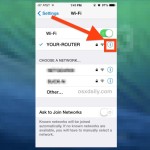
  1. Open Settings and tap “Wi-Fi” near the top
  2. Scroll down below available wireless routers and flip “Ask to Join Networks” to OFF
  3. Exit out of Settings

With the setting disabled, only known networks will be joined automatically, and the iPhone will no longer automatically search for and attempt to connect to random wi-fi networks. This means you will have to join new wireless networks manually by going through the same Wi-Fi setting and selecting the network directly.

Be aware that turning off this setting could lead to more cellular data being used, you may want to keep an eye on data use initially if you choose this option, because even the traditionally auto-accepted hotspots like Starbucks will no longer join on their own and will require manual connections.

On the plus side, disabling this setting can also save some battery life since the iPhone is no longer actively seeking out wireless networks to join.

Find & Scan Wireless Networks from the Command Line in Mac OS X

Feb 28, 2012 - 7 Comments

Find and Scan Wi-Fi Networks in OS X Command Line

A long hidden airport command line utility buried deep in Mac OS X can be used to scan for and find available wireless networks

To do this, the first thing you’ll want to do is create a symbolic link from the airport utility to /usr/sbin for easy access. Launch the Terminal and type the following command:

sudo ln -s /System/Library/PrivateFrameworks/Apple80211.framework/Versions/Current/Resources/airport /usr/sbin/airport

The above command must appear on a single line to work properly. Enter the administrator password to create the symbolic link, which functions as an alias would in the Finder. Now you can use the airport command without the lengthy path to access it.

Now, to scan for and find all wireless networks within range, type the following:

airport -s

The list returned will show all available wifi networks and their router name (SSID), the router address (BSSID), signal strength (RSSI), channel, and security types used by the network.

list wireless networks

By watching the output of airport -s and the RSSI strength, you could use the airport command line tool in a similar fashion to the Wi-Fi Diagnostics utility to optimize a wireless connection.

You can also get much of the same detailed information from the Wi-Fi menu by holding the Option key on click, although that will only show you details of one access point at a time.

Enable Internet Sharing in Mac OS X to Turn Your Mac Into a Wireless Router

Jan 5, 2012 - 27 Comments

Mac Internet Sharing

Did you know you can turn your Mac into a wireless access point by using Internet Sharing? Internet Sharing works for both Mac OS X 10.6 and Mac OS X 10.7 Lion, and with internet sharing enabled, your internet connected Mac will broadcast a wifi signal that can be used by another Mac, PC, iPad, iPhone, or whatever else you need to get online from.

Here are situations where Internet Sharing is particularly useful:

  • You don’t own a wireless router – no problem, let the Mac become one
  • There is only a wired internet connection (ethernet) available, and you need to get a wireless-only device online, like an iPad or MacBook Air
  • You’re at a location that charges internet access per device, rather than a flat rate for all devices, this is fairly common at hotels and airports
  • Skirt the connected device limitations of Personal Hotspot (iOS) and Internet Tethering from mobile phones

Hotels in particular have a bad habit of charging customers a per device fee rather than a single per room cost for internet access, using Internet Sharing gets around that greatly inflated expense.

The setup we are going to use in this example is as follows: Wired internet connection -> Mac -> Other Devices, here’s a simple diagram to demonstrate this:

How Mac Internet Sharing Works

It’s easy to set up, let’s get started.

How to Share Internet from a Mac to Other Computers & Devices

We’ll walk you through the process of setting up a secured wireless access point, broadcast from an internet connected Mac to be shared with other Macs, PC’s, or iOS devices.

  • Connect the ethernet cable to the Mac
  • Launch “System Preferences” from the  Apple menu and click on “Sharing”
  • Click on “Internet Sharing” from the left menu
  • Select the pull-down menu next to “Share your connection from:” and choose “Ethernet”
  • Mac Internet Sharing

  • Alongside “To computers using:” check the box next to “Wi-Fi” or “AirPort” (name depends on OS X 10.7 vs 10.6)
  • Next click on “Wi-Fi Options” and name the network, and then click to enable security/encryption, and then type in a WEP key as the wireless password
  • Share Internet from Mac Wirelessly

  • Click “OK” and confirm that you want to start internet sharing

Enable Internet Sharing from a Mac

You’re done. Your Mac is now broadcasting a wireless signal that can be picked up by any other wi-fi enabled devices. Connecting to the Mac’s shared internet connection is now the same as connecting to any other wireless network, find the wifi access point name you set, enter the password, and you’re online. The network is relatively secure thanks to the WEP password you set, if you forgot that password you just have to disable security and re-enable it to set a new one.

If you’re a perfectionist, you could then run the Wi-Fi Diagnostics tool and get the optimal signal for the network, but in a brief hotel or airport situation, the the devices will be close enough together that this won’t matter much.

How to Check Wireless Signal Strength and Optimize WiFi Networks in Mac OS X Lion

Dec 28, 2011 - 27 Comments

Wi-Fi

Wi-Fi Diagnostics is an incredibly useful utility to troubleshoot and optimize any wireless network and the signal strength of computers that are connecting to it. This utility comes bundled in Mac OS X Lion and works with all wireless routers and not only the Apple branded ones, meaning you can improve the performance of just about any wifi network by using it and making some adjustments along the way. It’s easy to use and we’ll walk you through the process of getting the best wireless signal using the app, but first we have to uncover the tool itself.

The Wi-Fi Diagnostics app is buried within Mac OS X 10.7, here’s how to access it:

  • From the OS X desktop, hit Command+Shift+G and enter the following path:
  • /System/Library/CoreServices/

  • Sort alphabetically and find “Wi-Fi Diagnostics”, if you plan to use the app even somewhat frequently it’s recommended to drag Wi-Fi Diagnostics into Launchpad for easy access

With Wi-Fi Diagnostics now in the easier to access Launchpad… wpen Wi-Fi Diagnostics.app and check the radiobox next to “Monitor wireless performance” then click on the “Continue” button.

Monitor WiFi Performance

Now is when the fun begins. The chart you see is a live wireless signal strength and noise meter, you want the yellow signal strength bar to be as high as possible. Pay attention to the green line of noise as well, you want that to be as low as possible in relation to the yellow line of signal strength.

Monitor wireless signal strength

If the signal strength is high and noise is low, you’re already good and you don’t need to change much. For most of us, signal will be lower than we want it to be, depending on where the wireless router is stored in relation to our computer gear.

Here are some tips to try out and to improve signal strength, keep an eye on the signal as you make adjustments:

  • Tweak the physical antennas on the wireless router and aim them in different directions
  • Move the wireless router away from walls, fireplaces, etc – even just a foot or two of space can make a big difference
  • Move the wifi router away from TV’s, microwaves, refrigerators, and other electronics that may interfere with signal
  • Relocate the Mac in relation to the router, this is obviously easiest with a MacBook Air or Pro

Once you have arrived at a reasonable compromise to how your hardware is physically configured and signal strength, enjoy your newly optmized wifi network.

Wifi signal meter

Some important things to remember here: not all internet connections are capable of transferring data at optimum wireless speeds, so you may not notice much of a difference in internet connectivity speed if any at all with these adjustments. This basically means that a weaker wireless signal may be more than adequate to transfer data at your ISP’s maximum bandwidth. Regardless, you’ll want the noise level to be as low as possible, since large amounts of wifi network noise can result in lost packets, reduced speeds, quirky behavior, random wireless connection dropping, and a variety of other problems.

If a wireless network is configured well and you continue to have problems with connectivity, check out some of our past articles on resolving such issues:

Using Wi-Fi Diagnostics I discovered my wireless signal to be much weaker when keeping the wifi router out of sight behind an LCD TV, simply moving the router away from the TV a few feet dramatically boosted signal strength. Run the app yourself and see what kind of performance boost you can get by adjusting your own wifi network.

Still Having Lion Wi-Fi Problems? This Solution Works

Nov 6, 2011 - 161 Comments

Lion WiFi Problems Resolved

We’ve published a variety of fixes for wireless connections dropping in Lion, and even a keepalive script that helps many users maintain a connection in some of the stubborn cases, but some Mac OS X Lion users continue to have problems with their internet connection failing. After diagnosing another MacBook with wireless stability problems post-Lion, I found a solution that hasn’t failed yet and doesn’t require any of the other tips.

Before proceeding, make sure you have done the following:

  • Be sure you are running the latest version of Mac OS X ( get 10.7.2+)
  • Apply all available system and software updates available to your Mac from  Apple menu > Software Update
  • Reset the WiFi Router

After you’re positive you’re on the newest version of OS X and have all software updates applied to the Mac in question, proceed with the solution:

Add a New Network Location & Renew DHCP Lease

  • Launch “System Preferences” from the  Apple menu
  • Select the “Network” panel
  • Click on the “Location” pull down menu and choose “Edit Locations…”
  • Click on the + plus icon to add a new network location, give it a unique name, and click “Done”
  • Back at the Network panel with the newly created location selected, click on “Advanced” in the bottom right corner
  • Click on the “TCP/IP” tab
  • Click on “Renew DHCP Lease” and wait for the numbers on the left to repopulate, then click “OK”

Renew DHCP in Mac OS X Lion

You should now have a stable wireless connection under Mac OS X Lion 10.7.2.

For most users the wifi stability issue was resolved with installing the latest OS X Lion updates, but in some cases is seems that old network connection profiles brought the problem forward for to the newest OS update. You may have to enter the wireless network password again before you can connect to the router, if you don’t know that be sure to find it out from someone who does before troubleshooting with this tip.

Did this work for you? Let us know in the comments.

How to Use Wi-Fi Sync for iPhone, iPad, & iPod touch with iOS 5

Oct 13, 2011 - 114 Comments

Wi-Fi Syncing in iOS 5 By far one of the best features of iOS 5 is wireless syncing and backing up, as the name implies it allows you to wirelessly transfer apps, music, books, contacts, calendars, movies, photos, everything you had to use a wired sync for, but it’s done through the air. If your device supports iOS 5, it’ll support Wi-Fi syncing, including iPhone 3GS, iPhone 4, iPhone 4S, iPad, iPad 2, and iPod touch 3rd & 4th generations.

Wireless syncing requires iOS 5 and iTunes 10.5 or later, be sure you have both installed before attempting to enable syncing through wi-fi or else the option won’t be visible. This setup process is the same on Mac OS X and Windows, and is fully compatible with both if you are syncing to the different platforms.

Set Up Wireless Syncing in iTunes 10.5 & iOS 5 for iPhone, iPad, & iPod

You’ll have to connect your iOS device to your computer to set it up, but after that you’re wire free with the exception of charging the hardwares battery.

From iTunes 10.5+

  • Connect the iOS device to the computer
  • Open iTunes and click on your iPad, iPhone, or iPod touch from the left side of the window
  • Click on the “Summary” tab in iTunes
  • Scroll down and click the checkbox next to “Sync with this iPhone over Wi-Fi” (or iPad or iPod touch)

Enable wireless syncing in iOS 5 for iPhone and iPad

With the iTunes side enabled, now pick up the iOS device to finish the process:

From iOS 5

  • Launch “Settings” and tap on “General”
  • Tap on “iTunes Wi-Fi Sync”
  • Select the computer you set up wi-fi syncing on in the prior iTunes step
  • Tap on the “Sync” button to start the wireless syncing

You can also double-check that this is working by disconnecting the iPhone or iPad and then choosing the “Sync” option from iTunes on the Mac or PC, you’ll see the familiar sync screen on your device.

Using Wi-Fi Syncing with iOS 5

Once wi-fi syncing is enabled and set up properly, the iOS device will automatically sync wirelessly any time the hardware is connected to a power source, including the USB cable, speaker docks, or otherwise. This process will also backup your iPhone or iPad automatically and wirelessly. Other than that automatic process, you can also initiate manual backups and syncing from the iPhone/iPad or from iTunes on the Mac or PC:

Start a Wireless Sync from the iOS 5 Device

  • Tap to “Settings” > “General” > “iTunes Wi-Fi Sync” and tap on the ‘Sync’ button

Start Wi-Fi Sync from iPhone

At any point you can cancel this by tapping the “Cancel Sync” button.

Start Syncing Wirelessly from iTunes on a Mac or PC
If you want to initiate a manual sync, you can continue do so by selecting that button within iTunes.

Start a wireless sync in iTunes to iOS device

If you want to really take advantage of wi-fi syncing and the PC-free experience, don’t forget to sign up for iCloud too. You can follow our guide on setting up iCloud here, it’s very easy and free for the first 5GB of cloud storage with Apple.

Troubleshooting Problems with Wireless Syncing
There’s a variety of potential issues and fixes, Apple provides has a few helpful tips if you run into any issues:

  • Verify the iOS device is running iOS 5 and the PC or Mac is running iTunes 10.5 or later
  • Quit and relaunch iTunes
  • Restart the iPhone, iPad, or iPod touch
  • Reset the wireless router
  • Verify the iOS device is connected to the same Wi-Fi network as the Mac / PC
  • Check for network interference from cordless phones, metal barriers, interfering wi-fi signals, microwaves, etc
  • Verify firewall settings and that TCP ports 123 and 3689 in addition to UDP ports 123 and 5353 are open and accessible (these are ports iTunes uses)

There doesn’t seem to be any limitation on the number of iPad, iPhone, or iPod touch devices that can be used with this, although you may run into the traditional limit of Macs or PC’s that an iOS device can be linked to.

Find a Router IP Address in Mac OS X

Oct 5, 2011 - 6 Comments

Finding a Routers IP Address in Mac OS X

The easiest way to retrieve a routers IP address is by going through System Preferences. This is much the same way that you get your Macs IP address, but the router IP is a few steps further in preference menus.

  • Open System Preferences from the Apple  menu
  • Click on “Network” preferences under the ‘Internet & Wireless’ section
  • Select “Wi-Fi” or whatever network interface you are connected through and click on the “Advanced” button in the lower right corner
  • Click on the “TCP/IP” tab from the top choices
  • The routers IP address is the numerical address next to “Router:” and will look something like: 192.168.1.1

Finding a routers IP address in Mac OS X

Ideally the router IP would be included in the detailed network data shown when option-clicking on the Wi-Fi menu since it fits in line with troubleshooting, but it’s not exactly hard to click through system prefs either.

Note: the above method retrieves the routers IP in relation to the LAN, not in relation to the internet. If you are looking for an external IP address as seen by the internet, you can get that by typing the following into the command line:

curl whatismyip.org

This will report back the IP of either your Mac or your router as it would be accessible from the internet and outside world, which is different than the router IP you use to connect locally.

Mac Wi-Fi Dropping? Use a Simple Keepalive Bash Script to Maintain Wireless Connection

Aug 8, 2011 - 37 Comments

Mac Wi-Fi Keepalive Script

Many users who upgraded to Mac OS X Lion discovered that their Wi-Fi connections were dropping periodically for no apparent reason. We published a reasonably thorough walkthrough with tips on fixing OS X Lion’s wireless dropping issues and that’s a recommended starting point because most tips are easy and less complicated, but among those was a trick to maintain data transfer by pinging an IP address.

The keepalive ping technique seems to work, but it turns out you don’t need to ping an external IP, you can also just occasionally ping your local wifi access point. With this in mind, we’re going to create a simple keepalive script that will run from the command line and ping your router every 5 seconds, allowing the wifi connection to maintain itself and prevent a drop.

Read more »

WiFi Dropping in OS X Lion? Here are Some Wireless Troubleshooting Solutions

Jul 22, 2011 - 145 Comments

Fixes for OS X Lion wifi dropping

Updating to Mac OS X Lion for the vast majority of users is a painless experience and everything works great. But for others there can be trouble, there are various user reports in our comments and around the web on Apple’s Support forums and elsewhere, that suggest that wireless networking in OS X Lion is a bit more sensitive than Snow Leopard. This could be an issue that only occurs on some wireless cards, or some routers, or some combination of the two, but nonetheless we’ve found a few workarounds and fixes to resolve this annoyance.

Some of these tips are borrowed from our Mac wireless problems troubleshooting guide, which is an excellent resource with many more solutions and fixes if the following tips don’t work for you.

Basic WiFi Troubleshooting

First try out these tips, they’re basic but work in some cases:

  • Turn wireless on & off - the first thing you should try, this alone fixes many cases of dropping wireless connections
  • Reboot the Mac – this is the classic Windows troubleshooting tip, but if you haven’t rebooted since the first Lion boot, this can clear up some troubles too
  • Reset the Router – just unplug the router for about 15 seconds and reconnect the power supply to cycle most routers, assuming it’s an issue with the router and how Lion is corresponding with it, this will fix the problem

More Advanced WiFi Troubleshooting Tips

Still dropping? The next set of tips pertain to the Network preferences, accessed through System Preferences > “Network”

    Set a manual IP address with DHCP – if all else fails, use “DHCP with manual IP address” in Network > Advanced > TCP/IP settings. Pick an IP that is in range of the router, but out of range of conflict. For whatever reason, this has worked for years to resolve Mac OS X wireless problems with some routers

  • Move Wi-Fi to the top of the Service Order list – This is an old tip that simply prioritizes WiFi as the primary method that your Mac should connect to the internet, and it seems to help maintain connections
  • Move the primary router to the top of “Preferred Networks” list – this is accessed from the “Advanced” menu in Network settings. There is some speculation that if you are in range of multiple routers, the connection will juggle between the two causing WiFi to drop. Drag your primary router to the top of this list.
  • Delete existing WiFi connections and re-add them – this is done by clicking on the ‘minus’ icon in the Network settings lower left corner, then just click on “+” and add a new WI-Fi connection
  • Add an extra DNS entry – it’s not clear why this works, but many users report success with just adding an additional DNS address to the list. 8.8.8.8 is Google’s public DNS and is reliable
  • Add a New Network Location – from the Network control panel, do the following:
  • Pull down the ‘Location’ menu and navigate down to ‘Edit Locations’
  • Click the + sign to add a new network Location
  • Give it a name, click OK
  • Select the “Network Name” (wireless router) and click Apply

Read more »

Get Detailed WiFi Info From the Menu Bar

Jun 15, 2011 - 9 Comments

Extended WiFi Networking Data

You can retrieve extended wireless connectivity data from anywhere within Mac OS X by holding down the Option key and then clicking on the WiFi menu icon.

Option-clicking will display a sub menu under your active wifi connection that shows what wireless band you are using (PHY Mode), the routers SSID (BSSID), what channel the wireless router is using, which encryption method (Security), signal strength (RSSI), the transmit rate, and MCS index (whatever that is).

You can also mouse-over other SSID’s to see a slightly more condensed version of this information. All of this can be helpful for avoiding potential channel conflicts, or when troubleshooting wireless problems.

And yes, I called it the WiFi menu rather than AirPort, since Lion is moving away from the AirPort references, at least in regard to the menubar.