You can use Spotlight as a calculator on the Mac, and it actually works impressively well. Yes, the Spotlight search feature can do calculations!
While many longtime OS X users probably know this, there are tons who are new to the Mac who aren’t aware that Spotlight is so robust, so the next time you need to quickly solve an equation, perform a calculation, or add up a handful of numbers for taxes, try using Spotlight Search on the Mac as a calculator to solve the equation. Here’s exactly how it works.
TechCrunch is reporting that the blackra1n Jailbreak lets iPhone 3G and iPhone 3GS owners running iPhone OS 3.1.2 use internet tethering. This is good news since Internet Tethering was recently killed off by the 3.1 update, but it’s bad news because now it’s pushing users to Jailbreak their iPhones in order to get a feature that used to be (and should be) included in the iPhone. Why AT&T is being so stubborn with the iPhone Internet Tethering capabilities is beyond me, I’m sure they’re just trying to figure out a way to charge us even more for it.
If you don’t mind jailbreaking your iPhone, go ahead and follow the very easy instructions on TechCrunch to enable internet tethering with iPhone OS 3.1.2:
I imagine this will get fixed relatively quickly, but you can do some funny (and potentially scary) things with Apple.com’s iTunes Affiliate sites just by modifying the URL parameters. The modified Apple.com URL is formed as follows: http://www.apple.com/itunes/affiliates/download/?artistName=OSXDaily.com&thumbnailUrl=https://cdn.osxdaily.com/wp-content/themes/osxdaily-leftalign/img/osxdailylogo2.jpg&itmsUrl=https://osxdaily.com&albumName=Best+Mac+Blog+Ever
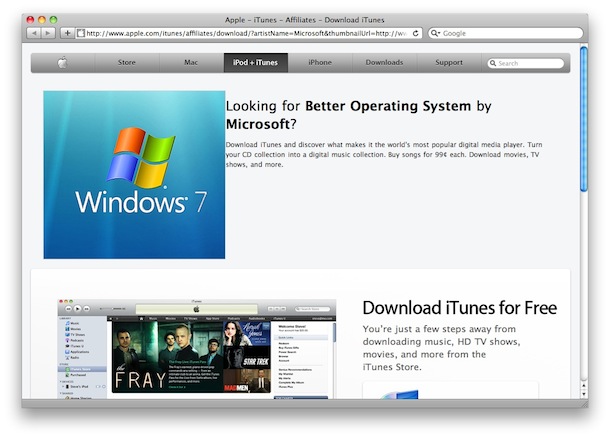
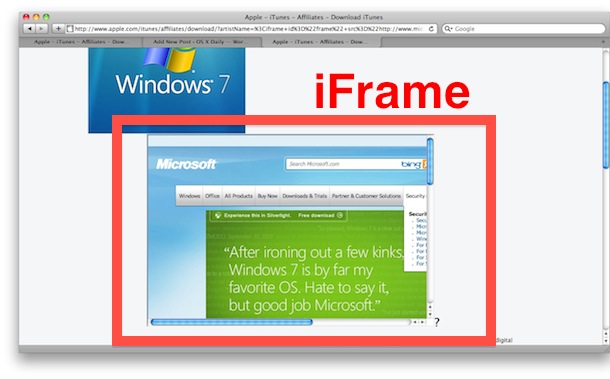
You can put whatever you want in the URL by changing the text and image links, which has led to some extremely funny hacked versions of Apple’s iTunes website. Other users have further modified the URL to be able to include other webpages, javascripts, and flash content via iFrames of other sites, which opens the door for all sorts of problems. At this point it’s only funny because nobody has used it for nefarious purposes, but if the hole is open for too long don’t be surprised if someone does. OS X Daily reader Mark sent this tip in with a modified link that opened a series of popup windows and had an iframe displaying less than savory content, displayed under the apparent (although hacked) Apple.com branding, and that is exactly the kind of thing that needs to be avoided. Let’s hope Apple fixes this quickly.
Here are some more screenshots showing what the URL modification in action, preserved for posterity:
Here’s one taking the Windows 7 joke even further by inserting an iframe with the Microsoft site into the content:
The Mac OS X Dock becomes animated when an app is launching, with a continuous bouncing animation, and also when an app wants to get your attention, with a less consistent and more urgent animated bounce. Both of these can be effect alert methods, but they can also annoy some users.
Regardless, you can make all Dock animations completely, both when launching an app in MacOS X, and even when an application is trying to notify you of something. This is achieved by entering a command string into the terminal (the command line of Mac OS X).
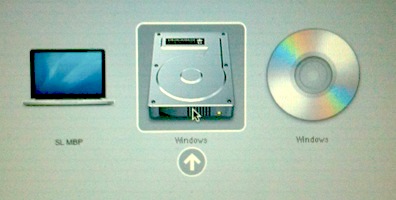
Bootcamp has been around a while, and it makes it pretty easy to install and run other Windows OS’s in conjunction with Mac OS X on the same Mac computer. It’s hard to have missed all the hooplah surrounding the Windows 7 launch, and many Mac users may want to try it out themselves, so with that in mind Apple created a pretty nice visual walkthrough on installing Windows 7 within Boot Camp.
If you’re in the market to run Windows 7 on your Mac natively without using a virtual machine, check out their guide, it’s really easy to follow and has lots of pictures to lead you along the installation process. Of course, you’ll need a copy of Windows 7 handy, and always back up your Mac before making any modifications to the file system, partition map, or drive!
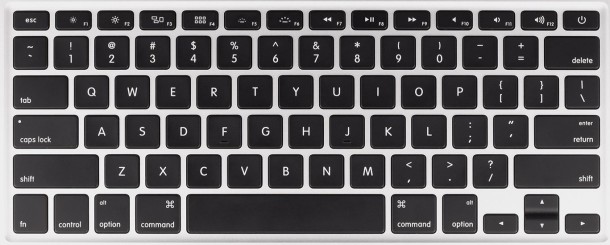
Rather than disabling the Caps Lock key on your Mac, consider a better idea for many users: simply reassign the key to a new keyboard function. This means that if you press the Caps Lock button, instead of initiating THE SCREAMING CAPS LOCK ALL UPPERCASE function, it could trigger something like the Control button, Command button, or Option button. Sound good? I think so to.
It’s easy to reassign the Caps Lock to a new keyboard button function, here’s what to do in all versions of Mac OS X:
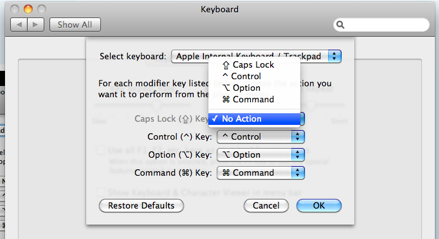
Open the System Preferences app from the Apple menu, and choose the ‘Keyboard’ preference panel
Select the “Modifier Keys” option and then locate “Caps Lock Key” from the list
Pull down the menu alongside that and choose another option to reassign the Caps Lock key to a new action; Control, Option, or Command
For example, I have a friend who remapped Caps Lock to function as a CONTROL key because it’s easier to press all three buttons at the same time for certain keyboard shortcuts. Of course, you’re free to pick whatever you want as the replacement, but it’s a great consideration that beats disabling the keys functionality entirely – otherwise you’re left with basically a dead key on the Apple keyboard.
If you switch these around, get confused, and decide you want to go back to the keyboard defaults, just click the “Restore Defaults” button to return to normal button functionality.
What do you think? Is this better than disabling the key completely? Or would you rather just lose it?
Need to migrate all of a Spaces set of windows to another Spaces screen in Mac OS X? Using a simple keystroke you can do just that.
To sweep all of your open apps and windows into a group via Spaces, here’s what you need to do and a quick overview of how this great trick works. Read more »
It’s not out in the wild yet, butMac OS X 10.6.2 is released and has been confirmed to kill support for the Intel Atom processor, this is especially important for Hackintosh users who have hacked various Atom based netbooks to run Snow Leopard. So what should you do if you have an Atom based Hackintosh Netbook? StellaRolla recommends staying with 10.6.1 (or 10.5.8 if you’re running Leopard on your Hackintosh, sine 10.5.9 will likely have the same Atom problems) for the time being, otherwise you can try upgrading to 10.6.2 but run an older or modified kernel. I think I’ll just stick to 10.6.1 when the update rolls around, I have a lot of confidence in the Hackintosh community so I imagine there will be a workaround rather quickly.
You can’t help but suspect this move is Apple’s attempt at shutting down the growing and popular Hackintosh Netbook community, since Apple has no product line that runs the Atom itself. Mac OS X runs absolutely flawlessly on much of the PC Netbook hardware, once it’s configured you wouldn’t know you’re not on a Mac. Maybe it’s in effort to kill the Atom Hackintoh Netbooks in anticipation of the rumored Tablet? Or maybe it’s something totally unrelated? Who knows, but for now, just take note that when the 10.6.2 upgrade comes out and you use a Hackintosh, you might want to avoid it for now.
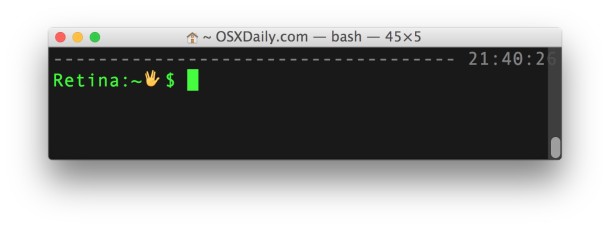
Shell scripting is wildly useful and a powerful way to manipulate a lot of files and to automate behind-the-scenes tasks in Mac OS X. This guide is intended for Linux users but the Bash shell is also used in Mac OS X, and as far as I can tell everything in this bash shell scripting guide works the same across the two platforms. Before checking out the guide you might want to check what shell you are using in Mac OS X by typing the following in the Mac Terminal:
echo $SHELL
Something like /bin/bash or /bin/tcsh will be reported back to you, obviously this Bash scripting guide only works for the Bash shell. If you need to, you can change the default shell rather easily in the Terminal preferences, but Bash has been the default shell since 10.3 and continues to be in Snow Leopard.
We’ve long been fans of the Dell Mini 10v for Hackintosh purposes, it’s small, quick, attractive, and can be obtained for surprisingly cheap in the $200 range. It looks like the rest of the blogworld is catching on to this little beast of a MacHack Netbook, Gizmodo has an excellent write up on installing Snow Leopard on the Dell Mini 10v, it’s definitely worth checking out. I’d highly recommend buying a refurbished unit from the Dell outlet to save yourself some serious cash (a friend got one for $189!), so check out our guide to a cheap Mac Netbook with the Dell Mini 10v, and then follow the Gizmodo guide to get it all up and running with Snow Leopard. For $200 you can’t go wrong!
As you may know by now, MAMP is a really useful instant webserver for your Mac that requires practically no setup or installation, you run the app and click “Start” – yes it’s that simple.
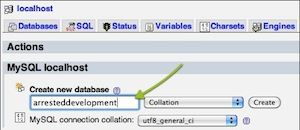
I use MAMP a lot for local web development and really like it, it’s probably the easiest way to develop locally with something like WordPress. I was going to write a full article on setting up MAMP and WordPress, but TUAW beat me to it! So rather than re-writing the wheel, let’s take a look at TUAW’s simple walkthrough on getting WordPress setup under MAMP:
If you’re a web developer you probably do a fair amount of development on your local machine using either the built-in Mac OS X Apache server or, in my case, something like MAMP. Because a local web server like this is really handy for testing this, you can make your local development life a bit easier by setting a local domain, and we’ll show you how to do that.
Did you read that correctly? Your purchase of a Mac Mini becomes free after 2 years due to it’s energy efficiency. Yea, it sounds ridiculous I know, I didn’t believe it either, but recent Mini owner CJ Gill compared his months of electricity bills with a Mac Mini to the months before one when he had an HP Pavilion desktop PC, and the monthly electricity savings of roughly $20 are going to pay for his Mac Mini in about 2 years. Check out the power bills in this chart:
When someone first sent me the link to this blog post titled “Free Mac Mini! No Strings Attached!” I figured it was yet another one of those pyramid scams where you sign up for 50 offers and you get your friends to sign up for 20 more and then you get a free burrito that eventually morphs into a Mac Mini after you sell 300 more offers. How awesome is it that Apple’s claim of having the worlds most energy efficient desktop translates into significant cost savings, enough so that after a few years depending on the Mini model you buy, it becomes free! Simply amazing. I know what my next Mac purchase is going to be!
Ever wanted to play music while you’re working in the command line? Maybe you want to play a podcast from the command line on Mac?
With the command line tool ‘afplay’ you can do just that, you can play practically any audio file format, whether it’s M4A, AAC, MP3, WAV, AIFF, or whatever else is on your Mac, and you can start the audio right from the Terminal.
From the Terminal, if you want to quickly find out what the largest files are in a directory, try this variation of the ls command:
ls -lShr
the l flag will display the items in a list, the S flag sorts by size, and h makes it readable in MB/GB (human readable), with r reversing the report order so that the largest file is the last on the list and thus right above the returned command prompt.
If you want the largest file in a directory of a certain type, simply specify the file type with a wildcard to show all files fitting that description:
ls -lShr *.zip
Try it out with any filetype *.mp3 *.mov *.wmv *.psd , etc
It really drives me nuts when files can be of the same kind but different type open different apps, I want to open all my images in Preview and all my video files in VLC. You can make Mac OS X open every file of a certain format type with a certain application by changing the file association from the Finder. We’ll show you how to change the file type association in Mac OS X so that you can set file kinds to open all in one application.
Users can get detailed wireless information from the Airport menu by holding down the “Option” key when clicking the menu icon. The ability to pull the Security type and Channel directly out of the menu is a big plus for me, but the other information should certainly be useful when troubleshooting a WiFi problem too.
This is a Snow Leopard only tip, and I thought we had covered it here at OS X Daily but apparently not… so thanks to TheGraphicMac‘s post on the matter to remind me to share it with you all (note the image attached to this post is from TheGraphicMac too).
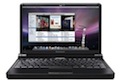
The Lenovo S10 may just be the easiest hackintosh netbook option to run Mac OS X, according to a guide on the site Tech-Chimp. The guide is so short and so simple, it’s almost hard to believe, this is basically what it says:
* Upgrade the Lenovo s10 firmware
* Using this tool, prepare an 8gb USB key to be the install device
* Boot the Lenovo off of the aforementioned USB key
* Install Mac OS X Snow Leopard, as if on a Mac, but on the Lenovo
* Boot Mac OS X on your Lenovo S10
What?? That’s it? I don’t have a Lenovo S10 to test this on, but if this is true, that is a truly amazingly easy install. They even say that sleep works on some of the models. Here at OS X Daily we usually opt for the turning the Dell Mini 10v into a Hackintosh Netbook because it’s so cheap ($199 refurbed on the Dell Outlet just last week) and it also is pretty easy to install on… but the downside to the Dell Mini 10v hackintosh is that Ram is very obnoxious to install. If we had the ability to test the Lenovo S10 guide from Tech-Chimp for Hackintoshing, it very well may get our hackintosh recommendation, even though it comes at a heftier price tag ($300 according to Tech-Chimp). Read more at Tech-Chimp.com:

 You can use Spotlight as a calculator on the Mac, and it actually works impressively well. Yes, the Spotlight search feature can do calculations!
  TechCrunch is reporting that the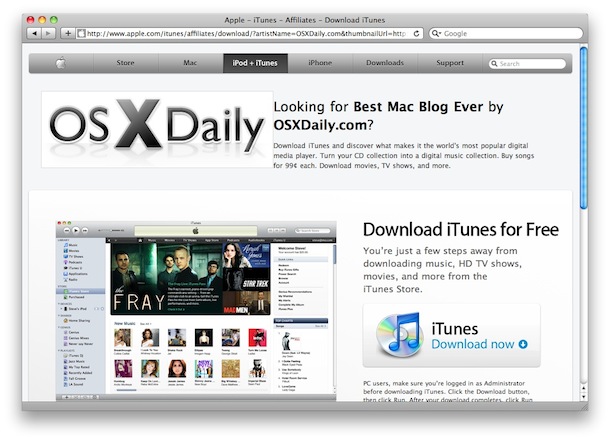
 The Mac OS X Dock becomes animated when an app is launching, with a continuous bouncing animation, and also when an app wants to get your attention, with a less consistent and more urgent animated bounce. Both of these can be effect alert methods, but they can also annoy some users.
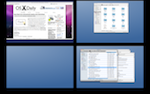 Need to migrate all of a Spaces set of windows to another Spaces screen in Mac OS X? Using a simple keystroke you can do just that.
 Shell scripting is wildly useful and a powerful way to manipulate a lot of files and to automate behind-the-scenes tasks in Mac OS X. This guide is intended for Linux users but the Bash shell is also used in Mac OS X, and as far as I can tell everything in this bash shell scripting guide works the same across the two platforms. Before checking out the guide you might want to check what shell you are using in Mac OS X by typing the following in the Mac Terminal:
 will do you wonders.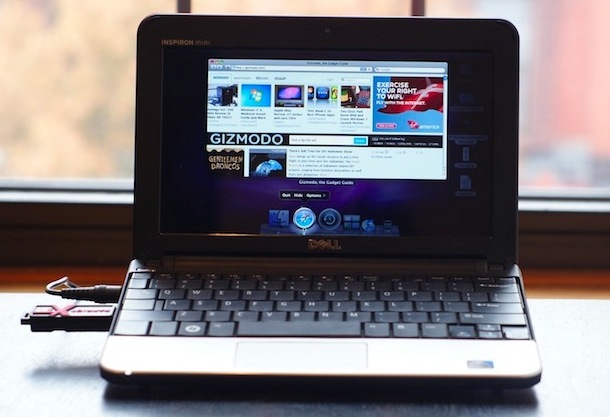
 Did you read that correctly? Your
  becomes free after 2 years due to it’s energy efficiency. Yea, it sounds ridiculous I know, I didn’t believe it either, but recent Mini owner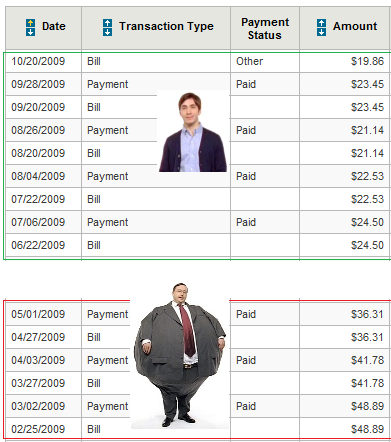
 It really drives me nuts when files can be of the same kind but different type open different apps, I want to open all my images in Preview and all my video files in VLC. You can make Mac OS X open every file of a certain format type with a certain application by changing the file association from the Finder. We’ll show you how to change the file type association in Mac OS X so that you can set file kinds to open all in one application.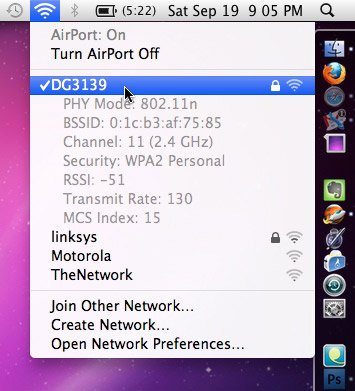
 The Lenovo S10 may just be the easiest hackintosh netbook option to run Mac OS X, according to a guide on the site