While the most significant visual change in iOS 26 is the Liquid Glass interface, you’ll also find some pretty notable design overhauls of commonly used iPhone apps. The Phone app is one such example, with the new Phone app design in iOS 26 being wildly different from the prior versions, featuring a new cluttered design that tries to stuff everything relating to the Phone app into a single page that requires scrolling just to look at your call log, the voicemail section has been relegated to a submenu that many users don’t see, and missed calls are also stuffed somewhere many iPhone users are having trouble finding, and tapping on a caller or name now opens the contact card instead of just calling the person directly like it used to.
If you’re unhappy with the new Phone app design in iOS 26, you can restore the old classic Phone layout onto iPhone with iOS 26 again. With the classic layout returned, you will no longer have the cluttered unified Phone interface, and you’ll instead have easy access to your familiar tabs for Favorites, Recents, Contacts, Keypad, and Voicemail again.
The Liquid Glass interface appearance is a fairly significant change in macOS Tahoe, bringing a lot of transparency, translucency, and shininess to the Mac interface appearance. While some users enjoy the new look, other Mac users may find it distracting, cumbersome, or difficult to read and interact with, and perhaps even conducive to causing eye strain. If you’re in the latter camp you might be wanting to disable the Liquid Glass user interface and revert back to the prior look of MacOS. While you can’t change back to the old look entirely, you can mostly disable Liquid Glass on macOS Tahoe with a few simple adjustments that reduce the look considerably.
Apple has released the second beta versions of iOS 26.1, iPadOS 26.1, and macOS Tahoe 26.1. The new beta builds are available for all enrolled beta testers, and offer continued refinement of the new operating systems.
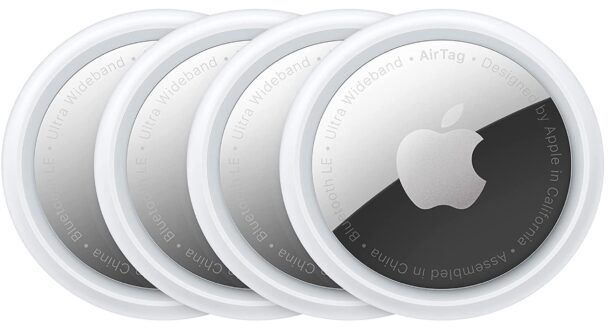
AirTags are super useful personal trackers with many uses from tracking a bag, purse, dog, cat, luggage, backpack, car keys, package, bike, car, or just about anything else you can imagine wanting to keep an eye on through the Find My network. Amazon is currently offering the AirTag 4-pack for just $65 ($16 per AirTag), which is down from the $99 retail price.
Amazon is again offering the M4 MacBook Air starting at $799 for the 13″ and $999 for the 15″ ($200 off MSRP), and separately, the M3 iPad Air for $449 for the 11″ and $649 for the 13″ (both $150 off MSRP).
FTC: OSXDaily is an affiliate partner with Amazon, meaning if you click a link and make a purchase, we may receive a small payment which goes towards keeping the site running.
The Mac command line tool tart continues to offer one of the simplest and fastest ways to setup a new virtual machine, and setting up a Tahoe VM is no exception. Whether you’re a developer, tinkerer, tester, or just someone who wants to give the latest MacOS Tahoe 26 operating system a trial run without committing to it as their primary MacOS operating system, the tart command offers a remarkably fast way to setup a virtualized MacOS Tahoe installation. Performance with tart is impressive too, thanks to using Apple’s bunded Hypervisor framework, so as long as you have an Apple Silicon Mac, you’ll be able to take advantage of MacOS virtualization like what we’ll cover here for getting a MacOS Tahoe 26 tart VM up and running in short order.
You’ll want some familiarity with the command line, since tart is installed and operated through the Terminal, but the actual Tahoe VM itself will be running in a window atop your existing MacOS installation.
Homebrew is a powerful command line package manager that allows you to easily install, update, and manage popular command line programs and tools, as well as traditional graphical apps with cask (and third party tools like Applite help you manage cask through the GUI too). It’s a popular tool with advanced Mac users and those coming to the Mac from a unix or Linux background, but even those who are curious about the command line will likely find utility in its capabilities.
Installing Homebrew the traditional way can be a little intimidating for some who are newer to the command since it requires using the command line itself just to install, and while that method still works just fine, we’re also going to show you a really simple way to install Homebrew using the traditional route of installing apps on Mac by using a package installer. Let’s get to it and you’ll have Homebrew installed in no time.
While the most obvious change to macOS Tahoe 26 is the newly rounded and translucent Liquid Glass interface appearance, there are also a variety of neat new features and customization options that you’re sure to appreciate easily well.
Let’s review some of the most useful tips for macOS Tahoe that you’ll want to check out, and that you’ll actually use.
If you’re a Mac user who watches system resource use by keeping an eye on Activity Monitor, htop, top, or any other monitor of deeper system processes, you may have seen a process called “com.github.squirrel” and wondered what it is, and perhaps even wondered if it’s bad. Is it dangerous or malware? github.squirrel has a funny name, so is it a legitimate process? What is it and what is it doing? Let’s clear up what com.github.squirrel is.
Apple has released iOS 18.7.1 for iPhone and ipadOS 18.7.1 for iPad. The small software updates include security patches, and are offered as alternatives to iPhone and iPad users who either don’t want to install iOS 26 onto their device yet, or cannot for compatibility reasons. No new features or major changes are expected in this release.
Apple has released MacOS Sequoia 15.7.1 and MacOS Sonoma 14.8.1 as security patch releases for Mac users who are not yet running the Tahoe operating system, of which MacOS Tahoe 26.0.1 was just released.
The updates are focused on security patches and do not include any other changes or features for the Sequoia or Sonoma operating systems.
Apple has issued MacOS Tahoe 26.0.1 as a software update for Tahoe users. The update focuses primarly on resolving an issue for Mac Studio owners who were not able to install the initial MacOS Tahoe 26 release onto the M3 Ultra version of the Studio. Apparently other bug fixes and security improvements are included as well, though they are unspecified in the release notes.
Apple has released the first update for iOS 26.0.1, which includes a handful of bug fixes specifically aimed at the new iPhone 17 lineup, as well as addressing an issue for all devices where Home Screen icons can appear blank after using various Liquid Glass customization settings, and another issue where VoiceOver might disable itself after updating to iOS 26.
The iOS 26.0.1 update is available for all devices, but if you have an iPhone 17, iPhone Air, or iPhone 17 Pro, you’ll definitely want to install this update right away because it fixes a problem with cellular connectivity, wi-fi disconnections, bluetooth disconnecting, and the camera where photos would have unusual artifacts. iPadOS 26.0.1 also fixes a bug where the onscreen keyboard could float in the wrong position.
Gamers and Mario enthusiasts in particular are sure to get a kick out of Super Mario Brothers Remastered, a fan-made unofficial remake of the original Nintendo Super Mario Bros game that includes new levels, new options and game modes, new characters, a level editor, physics improvements, and more.
Super Mario Bros Remastered is not meant to replace the original NES Mario, but more celebrate the fan favorite legendary game with some new modern fun twists, and you can even use custom resource packs to customize how the game looks and sounds, or add in your own characters.
Amazon is back again offering two of the absolute best deals on great new Apple gear: the M4 MacBook Air starting at $799 for the 13″ and $999 for the 15″ (both being offered at a $200 discount), and separately, the M3 iPad Air for $449 for the 11″ and $649 for the 13″ (both $150 off MSRP). If you’ve been shopping for a Mac or iPad, these are really great.
FTC: OSXDaily is an affiliate partner with Amazon, meaning if you click a link and make a purchase, we may receive a small payment which goes towards keeping the site running.
Some Mac users who have updated to macOS Tahoe 26 feel like the new operating system runs slower than their prior MacOS installation did. Reports online suggest there can be general sluggishness and lagging performance, sometimes with frame rate drops and stuttering animations on the screen, or even when typing. Other users in various forums have voiced complaints that app launching is slower or that app performance and interactions within MacOS, Finder, Photos, Safari, Chrome, and other apps may feel slower. Some MacBook users report their laptop battery drains faster, or that the MacBook feels hot to the touch as well. While every new MacOS release tends to find user reports like this, some complaints regarding sluggish or slow macOS Tahoe performance, unusual heat, and other weirdness may be easily resolved.
If your Mac feels slower after installing macOS Tahoe 26, read along and we’ll discuss some of the reasons that may be, along with some tricks to help improve performance.
macOS Tahoe 26 adds some new features, but it also has taken a prominent popular feature away on the Mac, and that is the removal of the dedicated LaunchPad app from macOS Tahoe. LaunchPad is the simple app launcher that is kind of iOS-like and has been on the Mac for a longtime, visible in the Dock for quick access to apps, and by keyboard shortcut. It was quite popular, so it makes sense that this change is impacting a fair number of Mac folks.
To be clear, while the LaunchPad app itself is removed from Tahoe, it has actually just been reincorporated into Spotlight, the MacOS Search feature. But it’s not quite the same, either visually or in functionality, and a fair number of Mac users who really liked Launchpad are disappointed by this change.
If you miss LaunchPad in macOS Tahoe, we’re going to offer you two solutions. First, we’ll show you how to use the new LaunchPad interface within Spotlight, and second we’ll introduce you to a free replica app that brings a LaunchPad alternative to macOS Tahoe.
I admit, I was a hater. I absolutely loathed the Liquid Glass interface on iOS 26. I thought it was obnoxious, distracting, excessive, confusing, ugly, hard to read. My initial impressions were really bad, it was so weird looking and off that it made me hate using my iPhone and I immediately regretted upgrading to iOS 26.
But then I went through all the various customization options, particularly for the Home Screen icons and Lock Screen, and made a few adjustments to Accessibility settings, I customized a couple wallpapers for my most frequent Messages conversations, and now I really like iOS 26 and the Liquid Glass interface changes. Say what?