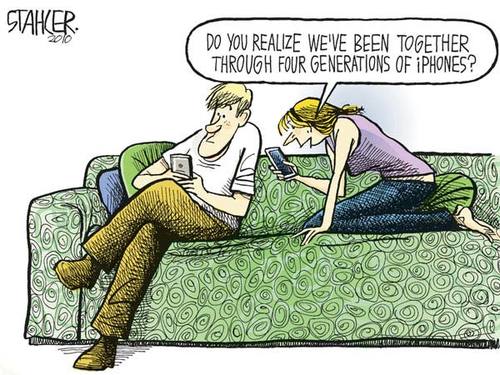
You know you’re an Apple addict when you start measuring time by the iPhone release cycles. I found this comic pretty funny, it looks like something out of a newspaper but I am unsure of it’s original source. Thanks to Daniel for sending this in!
Scrolling with momentum is a feature that is included with some MacBook Pro trackpads (and MacBooks thanks to a recent software update from Apple). The behavior is very much like the iPad or iPhone, when you are scrolling through anything you can give the trackpad a swipe and the speed of your gesture will determine the length of the scroll. I like this feature and keep it enabled on my MacBook Pro, but some people are bothered by it.
Apple is working on a “revolutionary” new Mac OS X 10.7 feature, according to a new job posting on Apple.com:
We are looking for a senior software engineer to help us create a revolutionary new feature in the very foundations of Mac OS X. We have something truly revolutionary and really exciting in progress and it is going to require your most creative and focused efforts ever.
The posting was originally discovered by AppleInsider and since then speculation has swarmed about what the feature is. Based on evidence within the posting itself and some other recent Apple news, it looks to be related to cloud computing.
Mac OS X 10.7 + Cloud Computing = Mac OS X Clouded Leopard?
The biggest hint in the job posting is the favoring of candidates who have experience developing with “internet technologies and services” and more tellingly “participated in or lead the architecture of large web scale systems” with HTTP protocol experience. This naturally leads to the assumption that Mac OS X 10.7 will indeed have Cloud features built into the foundation of the operating system. HTTP and XHTML5 are core elements in the Open Cloud Computing Interface (OCCI) spec and are integral parts in most existing cloud computing services and platforms. When you combine this knowledge with recent news that Apple is building a massive 500,000 square foot data center, there is little room left to wonder what Apple is up to.
Of course the question remains on how exactly cloud computing will be integrated with future versions of Mac OS X, iOS, and even iTunes, so let the speculation run wild! I’ll go first. Assuming this all pans out, the name Mac OS X 10.7 Clouded Leopard would certainly be fittingly appropriate and along the existing feline naming conventions as the first iteration of Mac OS X to directly integrate cloud computing features.
Here’s the entire job posting:
Are you looking to help create something totally new? Something that has never been done before and will truly amaze everyone? Are you excited by the prospect that what you helped create would be used every day by millions of Apple customers? Then come and work on with the Mac OS X software engineering team to help build a new and revolutionary feature for Mac OS X.
We are looking for a senior software engineer to help us create a revolutionary new feature in the very foundations of Mac OS X. We have something truly revolutionary and really exciting in progress and it is going to require your most creative and focused efforts ever.
An ideal candidate will have a degree in Computer Science (or equivalent), five years of professional experience developing C / C++ / Objective-C libraries or frameworks for use on end user systems, experience with developing for Internet technologies and services, and a passion for doing “really hard” things that have never been done before.
An exceptional candidate will also have up close and personal experience with the HTTP protocol as well as other protocols layered atop it, have participated in or lead the architecture of large web scale systems, have shipped multiple “platforms” for use by millions of users.
Additional Desired Skills and Experience:
– Mac OS X platform development experience
– Knowledge of Objective-C
– UNIX development experience
– BS in Computer Science or equivalent; 5+ years experience
You can see the job posting or even apply for it yourself at jobs.apple.com.
Excellent news for iPhone 3G owners who have been plagued by the iOS 4 update, an Apple spokeswoman told the Wall Street Journal that they are investigating various complaints about iOS 4 running slow on iPhone 3G.
Rumors continue to circulate that iOS 4.1 causes the iPhone 3G to run faster, but this has not shown true in our experience. If you are looking to retain the functionality of your iPhone 3G, we still recommend you do not upgrade to iOS 4 until Apple has worked out the kinks. While boasting some nice new features, the operating system update renders the 3G phone practically unusable at times, with immense slowdowns for everything from launching applications to just typing text messages and emails.
If you already installed the latest update, there’s a few tips to speed up iPhone 3G with iOS 4 but they are hardly a permanent solution and you’ll still have a slower OS than prior versions. Either an update from Apple is needed or any easy path to downgrade to 3.1.3, until then the 3G is really suffering.
Long ago in a time far far away, OK really it was just prior to Mac OS X, there used to be a Trash icon on the Desktop. Yup, earlier versions of Mac OS didn’t have a Dock at all, and the Trash was just another item on the desktop, sitting in the bottom right corner.
For the nostalgic, you can easily replicate this functionality by using the command line to create a symbolic link of the actual functioning Trash to a folder named Trash on your desktop. That may sound complex but it’s really not, you can do it with a single line entered into the Terminal application.
Starcraft 2 is out and it’s pretty much eating all my free time at the moment. I’m still in the process of tweaking my graphics settings for optimum performance, and the easiest way to benchmark Starcraft 2 performance on machines is to check the FPS (frames per second). Here’s how to do that on both a Mac and Windows SC2 install:
Check Starcraft 2 FPS on Mac
To check the frame rate on a Mac, while you are in a game hit: Control+Option+F
Show Starcraft 2 FPS on Windows
Checking FPS in Windows is basically the same key command, in SC2 hit: Control+Alt+F
On either operating system, once you hit the command to display frame rate, the FPS counter will show in the upper left corner and look like so:
If you’re wondering how well SC2 will run on your machine, check out the Starcraft 2 system requirements for Mac. Later I will post some preliminary findings on how well the game runs on a few different Mac setups.
Apple has launched their official Safari Extensions Gallery, at this time it features 100 extensions out of the roughly 300 out in the wild. All of the extensions on Apple’s gallery have been digitally signed and sandboxed so you don’t have to worry about security problems like some of the Firefox extensions have had in the past. You will need to have Safari 5 to be able to use the extension feature.
You can find out what the manufacturer, model number, and type of LCD panel you have in any of your Macs, including the iMac, MacBook Air, MacBook, or any model MacBook Pro by using a fairly complex looking terminal command.
If you’re unfamiliar with the command line, just copy and paste the line below into the “Terminal” app in OS X, then hit the return key. Don’t worry if this looks confusing, it kind of is, but what is reported back is easily readable. Read more »
If your iPhone 3G is running really slow after installing iOS 4, you’re not alone. While iOS 4 is a great OS for newer iPhone models, it makes my older iPhone 3G slow down to a crawl, with everything delayed and stuttering to catch up to touch. At times it’s practically unusable. So what can you do to speed it up?
Update: The first thing you should do is grab the iOS 4.1 download since it resolves some of the speed problems. After you install iOS 4.1, combine the update with the following tips to regain your iPhone 3G speed:
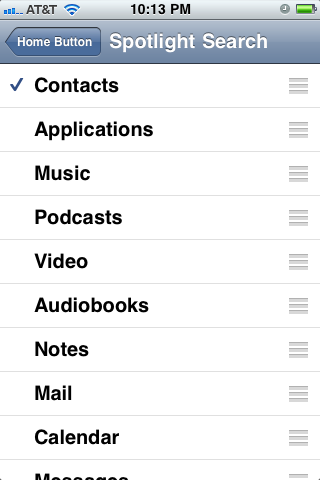
Disable Spotlight on iPhone 3G
If iOS 4 has your iPhone 3G crawling, disable Spotlight search:
Tap on “Settings”
Tap on “General”
Navigate to and select “Home Button”
Scroll down to “Spotlight Search”
Disable everything by tapping the check box next to each item
Exit settings
You can leave some of the Spotlight search items enabled but I find that the best speed improvement comes from disabling everything.
I don’t even use Spotlight on my iPhone so I’m not missing this feature at all, but it does seem to improve the speed of the iPhone 3G in common tasks like flipping between screens, scrolling through text messages and emails, and even launching some apps.
Bottom line: if you don’t use Spotlight in iOS, disable it!
Hard reset iPhone 3G
Hard resetting your iPhone can speed it up for a while. Here’s how to do it:
Press and hold the Home button and the Sleep/Wake button at the same time, hold both for about 5 seconds
Ignore the typical ‘Slide to power off message’ and continue holding both buttons until the iPhone shuts itself off
When your iPhone 3G resets itself you can stop holding the buttons, it takes about 10 seconds to hard reset the iPhone
Let iOS boot as usual, your phone should be temporarily sped up
This works because it clears your iPhone’s memory completely, but this is less of a permanent solution than disabling Spotlight since caches and memory will inevitably be full again.
Restore factory settings and do not restore from backup
I don’t like this solution much because you lose your backups, but it does seem to help iOS 4 run a bit better on the iPhone 3G. Basically you’re just doing a clean iOS 4 install on the iPhone, but then you are left with an empty phone. You can obviously easily resync your music but you’ll lose all your iPhone text message backups, contacts, apps, and pretty much anything else that made it your phone.
Downgrade from iOS 4 to iOS 3.1.3
If you’re totally fed up with iPhone 3G and iOS 4, you can always just downgrade to the prior OS version, but it’s not a particularly fun process and you obviously lose out on all the iOS 4 features.
Thoughts on iPhone 3G and iOS 4
I know I would have been annoyed if Apple had left out the iPhone 3G from being able to upgrade to iOS 4, but I feel like the performance is just terrible. It’s no wonder they left out multitasking and background pictures, but even without those features it just doesn’t run well on the older and slower hardware of the 3G. There are some rumors (ie: wishful thinking) swirling that when iOS 4 for iPad is released and the iOS 4 versions are bridged in iOS 4.1 (or whatever the version ends up being), that the performance will improve on iPhone 3G. I’m not counting on that and here’s why: the iOS 4.1 beta is already available for download and people have put it on their iPhone 3G to practically no avail. Perhaps future versions will change and we just don’t know that yet, but for now I am not a fan of iOS4 my older iPhone 3G.
Update: the final release of iOS 4.1 make the iPhone 3G run a lot better than iOS 4, but iPhone OS 3.1.3 is still faster. It’s up to you whether or not the iOS 4 features are worth the performance hit.
Oh, and if you have an iPhone 3G, do yourself a favor and do not upgrade to iOS 4! Folders and editing playlists are not worth the huge slowdown!
RTS fans around the world are having a party today; Starcraft 2 is out for both Mac and Windows, and you can download the game now directly from Blizzard or pick it up from various retailers. The game costs $60 regardless of whether you get the digital distribution/download or if you opt for the physical box.
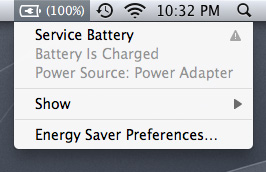
Modern versions of Mac OS have a feature for MacBook Pro, MacBook Air, and MacBook that will report to you the condition of your battery, as shown through the battery menubar item. Usually charging messages are shown there, but there are two other messages you may see in that menu, and they are “Replace Now” and “Service Battery”.
Read on to learn about the Service Battery message, what it means for MacBook computers and Mac laptops, and what you can do about it. Sometimes you can even fix the issue yourself!
Do you like iPhone humor? Of course you do! So, here’s the corniest Apple related joke you’ll see all day, and maybe even all year.
If you rename your iPhone or iPad to “The Titanic”, then guess what happens every time you connect the iOS device to a computer with iTunes and sync?
Well, every time you go to sync the device with iTunes it will say: “Syncing The Titanic” – Get it? The iPhone is named The Titanic… it’s syncing…. sinking… syncing… The iPhone is syncing…. get it? Oh dear. Tasteless, corny, cheesy, and every other adjective you’d use to describe a terrible joke.
If you want to try this yourself, rename your iPhone and then connect it to iTunes and sync. Silly and pointless. Sometimes it’s fun to be lighthearted and silly, right?
OK but in all seriousness, giving your iPhone and useful name is recommended for various reasons but if you want to give it a goofy name that’s your choice.
iPhone owners in the USA can now legally jailbreak and unlock their iPhone devices, according to new rules set forth by the US Government. While it’s great to have this legalized, it hardly stopped anyone from jailbreaking or unlocking phones in the past.
Though legalized, it’s worth mentioning that Jailbreaking or using a carrier unlock on an iPhone or iPad still voids your warranty per Apple’s user agreement. If you have a jailbroken device it’s probably wise to do a clean restore before bringing it in for service.
The jailbreaking exemption was part of a handful of exemptions announced Monday, including:
• allow owners of used cell phones to break access controls on their phones in order to switch wireless carriers.
• allow people to break technical protections on video games to investigate or correct security flaws.
• allow college professors, film students, documentary filmmakers and producers of noncommercial videos to break copy-protection measures on DVDs so they can embed clips for educational purposes, criticism or commentary.
• allow computer owners to bypass the need for external security devices called dongles if the dongle no longer works and cannot be replaced.
• allow blind people to break locks on electronic books so that they can use them with read-aloud software and similar aides.
If you’re looking to deploy the iPhone in an enterprise utility, don’t miss out on Apple’s iPhone Configuration Utility, which makes enterprise iPhone management a snap. Apple describes the tool as follows:
iPhone Configuration Utility lets you easily create, maintain, encrypt, and install configuration profiles, track and install provisioning profiles and authorized applications, and capture device information including console logs.
Configuration profiles are XML files that contain device security policies, VPN configuration information, Wi-Fi settings, APN settings, Exchange account settings, mail settings, and certificates that permit iPhone and iPod touch to work with your enterprise systems.
You can download the utility for either Mac OS or Windows:
Did you accidentally ignore a Software Update in MacOS or Mac OS X and now you need to install it on a Mac? Perhaps you were putting off a specific update for one reason or another, and now it’s time to install that ignored or hidden update again onto Mac OS X.
Fortunately, getting the ignored updates back is really easy, as we will walk you through several different procedures that allow you to reset the ignored software updates list. You can do perform this task either though the Mac App Store, from the Command Line of Mac OS X with Terminal app, or for prior versions of system software, the older Software Update app. You can use whichever method is appropriate for your machine and version of Mac OS, or whichever you prefer.
If you use FileVault and QuickLook on a Mac you may want to know that the combination of the two may leak some sensitive information from encrypted volumes.
Reader Jack R. sent in the following tip, explaining the situation further:
When FileVault and QuickLook are used concurrently, information about what files are stored on the encrypted volume becomes available and completely unencrypted on your hard drive. This is due to QuickLook’s thumbnail caching that is stored within the /var/ directory.
Run the following command to see the size of the QuickLook cache to demonstrate the potential:
find /var/folders -name "*QuickLook*" -exec du -h {} \; 2>/dev/null
The worst case scenario is the potential for exposing file names and even QuickLook thumbnails of documents and images. There’s also a sqlite file called index.sqlite within the /var/folders QuickLook cache directories that have a list of file names on the encrypted volumes.
Whether or not this is a legitimate security hole that is patchable or if it’s something I’m aimlessly worried about, I don’t know, but I am willing to bet many people don’t know about this!
Editor note: This definitely seems like a security hole. I imagine the best way to avoid this problem is to just not use QuickLook on the sensitive encrypted data, although that’s more of a workaround than a fix. Perhaps Mac OS X will eventually get a security update to resolve the problem.
Update 6/18/2018: Over 8 years later, this security bug still exists in MacOS / Mac OS X! That’s the bad news. But here’s the good news; security researcher Patrick Wardle has brought some renewed attention to this flaw and thus it will likely get patched in a future software update.
In the meantime, Wardle recommends the following command string to delete the Quick Look cache, which can be entered into the Terminal of MacOS / Mac OS X:
qlmanage -r cache
Executing that command will clear the Quick Look cache. Keep an eye out for future security updates and software updates to Mac OS as they will likely patch the bug once and for all.
CNN Money posted the results of a consumer survey that has some really interesting facts about the iPhone and AT&T. The most amazing claim is the percentage of people who are committed and loyal to the iPhone versus those who own Androids. Here are the important figures:
77% of iPhone owners say they’ll buy another iPhone
Only 20% of Android customers say they’ll buy another Android phone
73% of iPhone users are very satisfied with AT&T’s service
69% of overall smartphone users say they are satisfied with their mobile provider
Phone owners pay $12/mo more for service than the average smartphone user
iPhone is worth $1.8 billion in sales to AT&T this year, and will generate $9 billion in revenue for the provider over the next five years
Obviously the iPhone is a cash cow for AT&T, even if it is also heavier maintenance due to it’s users increased data consumption. AT&T gets a lot of vocal complaints about their service, but the survey shows that despite the woes of the vocal minority more iPhone users are satisfied than smartphone users are overall with any mobile provider.
How’s this working out for the other providers? According to the article “Verizon has been regretting turning away Apple for the last three years” which isn’t surprising considering the huge amount of revenue and loyalty the device inspires. Now whether or not Verizon will get iPhone remains to be seen, but you can bet everyone is fighting for the chance and AT&T is fighting to renew exclusivity.
I would undoubtedly buy another iPhone and recommend them to anyone, I’ve used several Android devices and I’d even consider them the ‘next best’ smartphone, but given the choice between the two devices I will always choose an iPhone – the user experience is just so much better and the iPhone is just, well, cooler.



 Excellent news for iPhone 3G owners who have been plagued by the iOS 4 update, an Apple spokeswoman told the
  Long ago in a time far far away, OK really it was just prior to Mac OS X, there used to be a Trash icon on the Desktop. Yup, earlier versions of Mac OS didn’t have a Dock at all, and the Trash was just another item on the desktop, sitting in the bottom right corner.

 . I love RTS games, and I can say it’s definitely worth it.
 Apple has launched their official Safari Extensions Gallery, at this time it features 100 extensions out of the roughly 300 out in the wild. All of the extensions on Apple’s gallery have been digitally signed and sandboxed so you don’t have to worry about security problems like some of the Firefox extensions have had in the past. You will need to have Safari 5 to be able to use the extension feature.


 ?
?

 iPhone owners in the USA can now legally jailbreak and unlock their iPhone devices, according to new rules set forth by the US Government. While it’s great to have this legalized, it hardly stopped anyone from jailbreaking or unlocking phones in the past.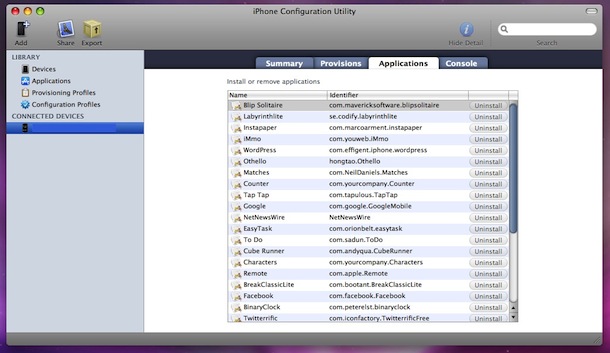
 Did you accidentally ignore a Software Update in MacOS or Mac OS X and now you need to install it on a Mac? Perhaps you were putting off a specific update for one reason or another, and now it’s time to install that ignored or hidden update again onto Mac OS X.
  If you use FileVault and QuickLook on a Mac you may want to know that the combination of the two may leak some sensitive information from encrypted volumes.