Apple has started running a fun new iPhone commercial focusing on the hands-free Hey Siri feature, as it’s being used by none other than Cookie Monster from Sesame Street fame.
If the average iPhone user has a complaint about their device, it’s almost always that the battery of iPhone doesn’t last as long as they’d like it to. While this is less of a concern with the larger iPhone Plus models, the fact is that all iPhones can run out of battery during the course of usage throughout the day, though depending on individual usage the iPhone battery life may drain down faster, or slower too. There are no shortage of tips to preserve battery life of iOS devices, many of which actually work, but another option is to use Low Power Mode, which is an excellent feature included in modern versions of iOS.
The Health app on iPhone is able to track steps and mileage, and if you have an Apple Watch it will keep track of your heart rate, active calories with a pedometer, and other fitness data as well. When you open Health app, the Dashboard offers an overview of activity for the day, week, month, and year, but there isn’t an obvious way to drill down and get more specifics, since tapping on an individual stat just opens the “All Recorded Data” screen which is not exactly user friendly and feels a bit like stumbling into a jumbled data entry job for SQL or an excel spreadsheet.
But it turns out there is a super easy way to get specific details about any of the tracked items in Health app, on a per hour or per day basis! It’s just not well known, as it’s basically hidden without an obvious cue to do so; all you have to do is rotate your iPhone. Here’s how this works:
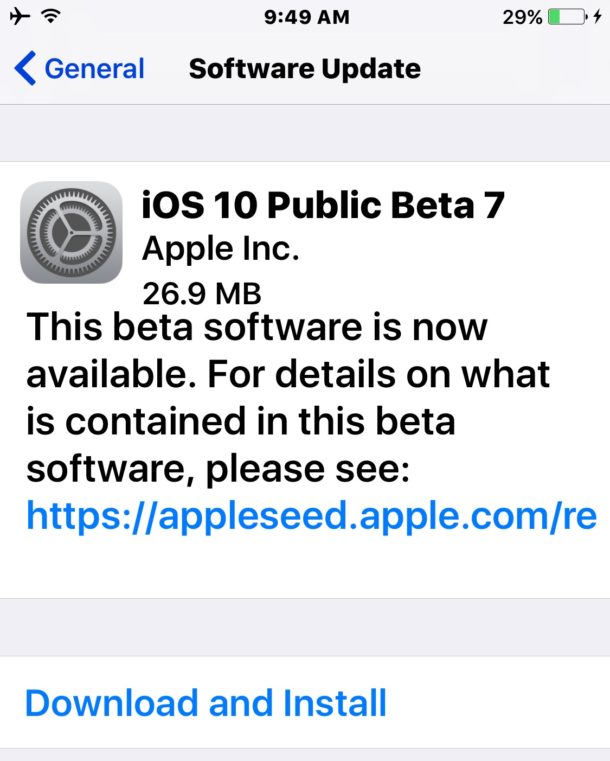
Apple has released OS X 10.11.4 beta 7 to Mac users in the developer beta testing and public beta testing programs. The new build arrives as 15E64a and includes bug fixes and feature improvements to the beta release.
Code signed applications allow security conscious users to verify the creator and hash of a particular app to help confirm it has not been corrupted or tampered with. This is rarely necessary for average Mac users, particularly those who obtain their software from the Mac App Store or other trusted sources since the apps are certified, but verifying the digital signature of an app can be extremely helpful for users who get apps from third party sources.
Many Mac users like to keep a watchful eye on their system stats, including processor utilization, memory usage, disk activity, network usage, CPU temperature, fan speed, and perhaps battery stats. The Activity Monitor Dock icon offers one way to do this, but it’s on a limited basis, so if you’d rather see all kinds of system resource activity in a single control panel you may appreciate these two Notification Center widgets for Mac OS X.
Though most iPhone and iPad users likely don’t closely follow Android news, a new beta version of the next Android OS release came out recently, and long with it arrived a pretty nice default wallpaper too.
The Android N default wallpaper image is of some distant hills or a mountain range silhouetted against a pink dusk sky, the type of scene you’d see if you were out past suppertime in an area without light pollution. So why not appreciate the imagery and set it on your iOS device or Mac as the background picture?
Having used a relatives computers recently I discovered their Google Chrome web browser was constantly throwing a “Your connection is not private” error message on many web pages, thereby preventing the page from loading unless they chose to ignore and reload the ‘not private’ page. The “not private” message can be a little disconcerting, so it’s no wonder it can alarm some users. Interestingly, this error was turning up both on their Mac OS X Chrome browser, as well as a separate Windows computer that was also using the Chrome web browser, and they were convinced they had been the victim of some elaborate hack.
Well, rest assured there was no hack. It turns out this is a remarkably simple error message to fix in Google Chrome, and so if you experience the “your connection not private” error message on any computer, you can quickly resolve it regardless of the error being encountered on a Mac or Windows PC.
The zipping zooming flying around animations strewn throughout iOS are activated when opening and closing apps, switching app screens, tapping settings, and doing just about anything else on an iPhone or iPad. This motion eye candy causes some users to experience nausea, but aside from that they also make the device feel a bit slower since performing just about anything on an iPhone or iPad has to render and draw the eye candy animations on screen. One common trick is to enable the faster fading transitions in iOS instead by turning on Reduce Motion, but if you want to completely disable animations for a while, you can rely on a bug in iOS instead.
iPhone and iPad users have long been able to zoom into still photos and pictures on their devices, and now with the latest versions of iOS, you can zoom into and out of videos and movies that are playing as well.
Plist files contain preference specifics and properties relevant to a particular application or portion of Mac OS X system software. Depending on where the plist file is located and what function they serve, they can either be in XML format, binary format, and sometimes even json. For users who need to modify a plist file or convert the file format to or from XML and binary, you can do so easily in the OS X Terminal with the help of the plutil command.
Apple is holding an event on Monday, March 21, at their Cupertino campus location, according to invites sent to selected media members (us not included). The invitation email reads “Let us loop you in” and features the top of an Apple logo with space grey, silver, gold, and rose gold pastel shapes.
Several new products are expected to debut at the Apple event, including a revised 4″ iPhone, a revised iPad 9.7″, and a variety of new Apple Watch bands. System software updates are also presumed to arrive as well.
iOS includes a helpful feature which allows users to zoom into anything on an iPhone or iPad screen to make it easier to read text and view elements. While this feature is undeniably useful for many users, it can also be a source of frustration for others who wind up enabling the feature accidentally, only to discover their iPhone screen is stuck in zoom mode.
Launchpad is the quick application launcher available from the Mac OS X Dock and a keystroke that looks quite a bit like the Homescreen of iOS. By default, the Launchpad app grid usually displays icons in 7 rows and 5 columns of apps, but with a little adjustment from the command line of OS X you can switch and customize the Launchpad icon grid to any number of apps you’d like to see on the Mac.
One of the more useful 3D Touch tricks is the ability to preview a link before opening it, allowing iPhone users a way to quickly see a preview of a webpage link before loading the entire thing in Safari. This can be activated from an email, from messages, or Safari itself, and it helps to determine if a link is what you’re looking for or worth opening. It’s use case is quite similar to previewing links with multitouch on the Mac, and it works much the same as well.
The Mac Messages app allows users to delete portions of a conversation and specific messages contained within a thread, without clearing out the entire chat transcript. This targeted message removal feature is helpful if you want to delete a part of a chat that is best left private, or perhaps because it contains sensitive data, a secret, or maybe it’s just outright embarrassing. Whatever the reason to remove just a segment of a conversation in Messages for Mac OS X, it’s easy to do, if not completely obvious.