
Customize “Today View” in Notification Center for iPhone & iPad
Oct 31, 2013 - 8 Comments

Swiping down from the very top of your iPhone screen (or iPad), you’ll find Notification Center swoops on down, where alerts, notifications, iMessages, and missed calls appear. There’s also the “Today” tab, which aggregates information from your Calendars, Reminders, Stocks, and destinations, and puts them into an active days summary of what’s on tap for today.
If you want to customize the appearance of Today view, either where things appear in the list as you scroll, or to hide specific items, you can do that directly through iOS settings.
Read more »
By Paul Horowitz - iPad, iPhone, Tips & Tricks - 8 Comments
 Network Utility is a great tool that has been around on the Mac since the very first version of Mac OS X. It provides a variety of helpful networking tools and details, the “Info” tab includes general network info on a per interface level showingIP address, MAC address, link speeds, and sent/received data transfer statistics, and you’ll also have easy GUI access to what are otherwise command line tools, like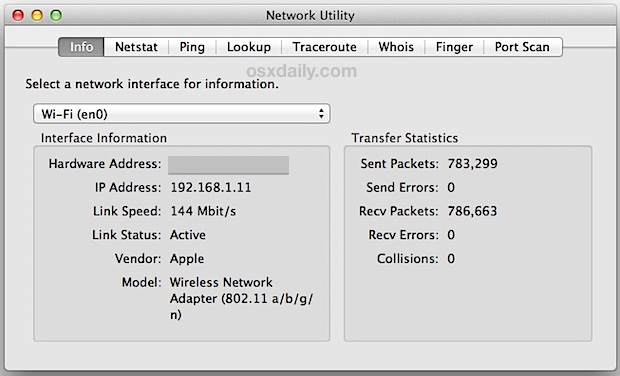
 Sharing files between Macs and NAS drives and Windows PC’s has always been very easy, but Mavericks brought a slight change that has caused some problems for certain users in mixed PC and Mac environments. Without getting too geeky, Apple adjusted the default protocol for SMB (Samba, the Windows file sharing ability) from SMB1 to SMB2, and the SMB2 implementation apparently carries a bug which is incompatible with many NAS (Network Attached Storage) devices, and some versions of Windows. The issue is pretty obvious when you encounter it: Many Windows PC’s, NAS drives, and Linux machines won’t access or mount from the Mac, and instead will try to connect or mount forever and ultimately time out, preventing connections,
  App Nap is a great feature that arrived with OS X Mavericks which automatically pauses applications once they have gone unused for a period of time, helping to reduce energy consumption and saving battery life for portable Macs. Though App Nap can make a big difference in extending the battery life of MacBooks, there are some unique situations where users may not want an application to pause itself when unused, inactive, or otherwise in the background. For these situations, you can selectively prevent App Nap by disabling it on a per-application basis. Most users should not disable App Nap without a compelling reason to do so.
 All of the latest versions of OS X have opted for a conservative approach to showing the users ~/Library/ directory, a folder which contains a variety of important files, settings, preferences, caches, and many specific files that are required for apps to run as intended. Because of the possibility of unintentional harm to a users Mac, OS X defaults to hiding that folder, with the intention on preventing novice users from making changes to it. OS X Mavericks is no different, but with the release of 10.9, all Mac users have an easy option to permanently show the User Library directory without having to result to the command line or other tricks that were previously required for access to the ~/Library folder.
 Many of us rely on the iPhone as an alarm clock these days, but unless it has been changed, the default alarm clock sound effect is usually the same as the default iPhone ringtone. That can cause some frustration and confusion as you’re half asleep and the alarm goes off, sounding like you’re getting a phone call, but fortunately if you would rather hear something else play it’s really easy to change the alarm clocks tone to be another sound, or you can even pick a song if you want to as your iPhone alarm clock sound.

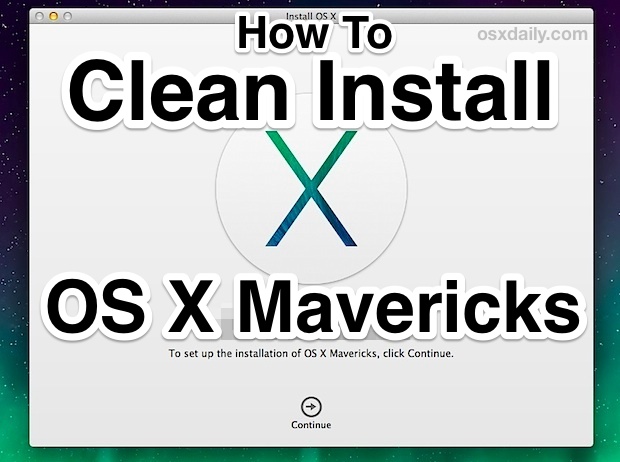


 Apple has released iOS 7.0.3 for iPhone, iPad, and IPod touch users. The update includes iCloud Keychain support, which syncs your login and password data between iOS and OS X devices, fixes problems with iMessage, and also includes many bug fixes, feature enhancements, and security updates. iPhone 5S users will find an update to the accelerometer which allows it to calibrate accurately as well. Full release notes are at the bottom of this article.