Bring Emoji Support to the Google Chrome Web Browser with Chromoji
Mar 15, 2014 - Leave a Comment
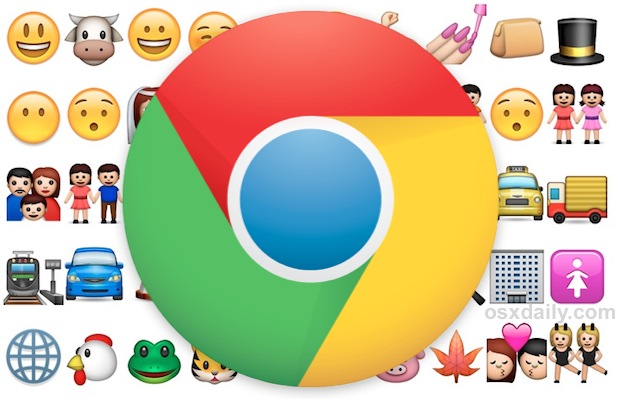
Chrome users may have noticed that the popular Emoji characters found on iPhone and the Mac render just fine in Apple’s Safari web browser of MacOS X, but not in Google’s Chrome browser.
Instead, us default Chrome users on the desktop will see a square rendered 😃 rather than the intended emoji character, largely being left out of the emoticon fun.
That can be quickly changed by installing a free third party extension called Chromoji, which makes those same snazzy emoji characters visible within the Chrome desktop browser of MacOS X, Windows, and even Linux.
Read more »
By Paul Horowitz - Mac OS, Tips & Tricks - Leave a Comment


 A fair amount of Mac users have ditched the “All My Files” default Finder window option by setting
 When you think of sending out text messages you probably
  The Mac can now make outbound voice calls to other Apple users that have an iPhone, iPad, iPod touch, or another Mac, using nothing but the native FaceTime Audio service. Built into Mac OS X, FaceTime Audio can be used to call any other FaceTime user, free, anywhere in the world, and it provides excellent audio quality for the voice conversation.
 Some iPad Air owners have been impacted by a persistent crashing issue, where either the entire device crashes and reboots, or, more commonly, where the Safari browser crashes and randomly quits. The Safari crashing issue is often repeatable by pointing Safari at several Javascript heavy web pages with numerous tabs open, or by opening a PDF within a browser window with many tabs open. Upon investigating the iPad Air crash logs, the issue is almost always shown as a low memory error, signifying that available system resources are insufficient for the Safari actions.
  Have you ever wished you could tag files on the Mac with a simple keystroke? You’re almost certainly not alone. Tagging files and folders in Mac OS X can be a handy way to help manage and organize the contents of the Finder, even if only used on a limited basis for specific projects. To get the most out of file tags though, you’ll want to get quick access to the feature. One way to do that is with the



 Most command line users rely heavily on