Subscribe to OSXDaily

Subscribe to RSS Subscribe to Twitter Feed Follow on Facebook Subscribe to eMail Updates

Shared on Facebook

Shop at Amazon

Ad

OSXDaily on Facebook

Search defaults write

Disable Automatic Termination of Apps in Mac OS X Lion & Mountain Lion

May 15, 2012 - 14 Comments

Disable Automatic Termination of Apps in Mac OS X

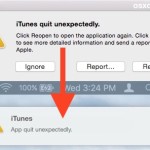
Automatic termination is a feature of OS X Lion and OS X Mountain Lion that comes from the realm of iOS, the idea is that after an app is unused for a period of time and becomes inactive, it will automatically terminate to free up resources for other tasks. With the help of the new auto-save feature, the user should theoretically never notice any of this going on and they can continue on with their work as usual when they need to, letting Mac OS X manage processes and resources for them without quitting apps or manual interaction through Activity Monitor.

For the vast majority of users this is a good thing and most are probably completely unaware of the features existence, but not everyone is thrilled with the prospect of dormant applications being quit without their command and some find it really annoying. If you fall into the second category and want to turn off automatic app termination in OS X, here is how to do it. Don’t worry, we’ll also show you how to turn it back on.

Disable Automatic Termination in Mac OS X
Launch Terminal and enter the following defaults write command:

defaults write -g NSDisableAutomaticTermination -bool yes

Relaunch apps that use auto-termination for changes to take effect.

Re-Enable Automatic App Termination in Mac OS X
You can always reenable the default behavior of OS X and turn auto termination back on:

defaults delete NSDisableAutomaticTermination

Or by reversing “yes” to “no” and running the original command again:

defaults write -g NSDisableAutomaticTermination -bool no

Again, relaunch apps for the changes to take effect and to have auto-terminate enabled again.

This is something that Mac OS X and iOS handles fairly well, and if you’ve never been annoyed by the feature it’s recommended to leave it enabled and let OS X manage tasks itself.

Thanks to qwerty for finding the tip in a StackExchange thread.

Disable Elastic (Rubber Band) Scrolling in Mac OS X

May 10, 2012 - 10 Comments

Disable Elastic Scrolling in Mac OS X

Ever since Mac OS X 10.7, the Mac has included the same elastic over-scrolling that exists in the iOS world. Frequently called “rubberband scrolling”, it kicks in as an overscrolling effect that runs out of the scrollable region revealing the linen background before snapping back into the scrollable region. Scroll up quickly with or without inertia in virtually any window since OS X Lion to see the effect in action. Rubberbanding makes for good eye candy and makes the Mac feel familiar to those coming from the iOS world, but some users are annoyed with it and will appreciate the ability to disable the scroll elasticity completely.

Launch Terminal found in the /Applications/Utilities/ directory and enter the following defaults write command exactly:

defaults write -g NSScrollViewRubberbanding -int 0

Apps will need to relaunch for the changes to take effect, though disabling rubber band scrolling does not work in every app.

To undo the change and get rubberband scrolling back, use the following defaults command:

defaults delete -g NSScrollViewRubberbanding

This is a great tip that has long been wished for by many users, heads up to MacWorld for the post.

Stop Pasting Full Names When Copying an Email Address in Mac OS X Mail

May 3, 2012 - 9 Comments

Apple mail icon Ever noticed that when you copy an email address from OS X Mail app and paste it elsewhere that you get the addressees full name as well as their email address? Try it yourself by right-clicking on someones email address like someonesname@domain.com and copy it, then paste it elsewhere and it will show up as “Someones Name “, which can be fairly annoying if you just want an address.

To resolve this copy/paste annoyance, launch Terminal and paste this line into the command line:

defaults write com.apple.mail AddressesIncludeNameOnPasteboard -bool false

Relaunch Mail app for changes to take effect, then try to copy and paste an address. Only the email address should go to the clipboard now.

Thanks to Randy M for the tip

Disable the File Extension Change Warning in Mac OS X

Apr 11, 2012 - 5 Comments

File Extension change warning in OS X

Assuming you have file extensions shown in the OS X Finder, attempting to change a file extension causes a warning dialog with a confirmation box to appear. This is annoying if you know what you’re doing and you have a compelling reason to change extensions, so let’s turn it off using the command line and defaults write.

First, open the Terminal, located within the /Applications/Utilities/ directory, then copy and paste in the following command:

defaults write com.apple.finder FXEnableExtensionChangeWarning -bool false

Follow that up by relaunching the Finder with killall:

killall Finder

To reverse the change and get the warning back when you attempt to change file extensions, use the following defaults write command:

defaults write com.apple.finder FXEnableExtensionChangeWarning -bool true

Kill the Finder again for changes to take effect.

Enable Half-Star Ratings in iTunes

Apr 9, 2012 - 3 Comments

Half Star Ratings in iTunes

iTunes allows users to rate songs on a 1 star to 5 star basis, song rating data can then be used for a variety of purposes, either for your own reference or for creating custom play lists that only include songs rated over a certain star value. But what if a song is somewhere in the middle of the rating scale, not quite worthy of 4 stars but not a 3 star song either? For more precise personal ratings, enable the half-star rating option in iTunes.

Launch the Terminal, found within the /Applications/Utilities/ directory, and enter the following defaults write command:

defaults write com.apple.iTunes allow-half-stars -bool TRUE

Quit and relaunch iTunes for changes to take effect. To give something a half star, click and slide the star rating scale until the 1/2 value shows.

To remove the half-star rating option use the following defaults command and then relaunch iTunes again:

defaults delete com.apple.iTunes allow-half-stars

Removing the half stars moves the song rating to the star below it, so a 3 1/2 star song would turn into a 3 star song, and so on.

Disable Google Chrome Automatic Software Update

Apr 6, 2012 - 2 Comments

Google Chrome automatic update

Google Chrome automatically updates itself in the background when a new version is out, this takes responsibility out of user hands and makes it simple to keep up to date with the latest version of the app. Generally you should leave automatic update enabled, if not for its ease than for the security benefits of having the freshest browser version pushed to you automatically, but if you want to disable the sizable automatic updates to reduce Personal Hotspot data use or something similar you can do so with a defaults write command.

Disabling Google Chrome Automatic Updates

  • Launch the Terminal, found in /Applications/Utilities/
  • Enter the following defaults write command and hit return:
  • defaults write com.google.Keystone.Agent checkInterval 0

  • Exit out of Terminal and restart Google Chrome

Note that this disables all automatic updates for all Google applications on the computer, not just for Chrome. There may be a way to disable Chromes automatic updating only but I haven’t found it, even Google offers the more broad solution outlined above.

Manually Updating Chrome After Automatic Update is Disabled

Now that you’ve disabled Chrome’s automatic updates, you’ll want to manually update. The easiest way would be to just download the latest version of Chrome from the website, but you can also initiate the update process from the command line by following the steps outlined below:

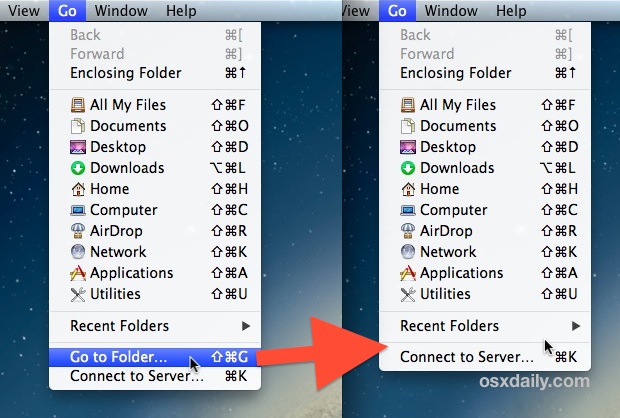
  • From the OS X Finder, hit Command+Shift+G to bring up the Go To Folder window, enter the following path:
  • /Library/Google/GoogleSoftwareUpdate/GoogleSoftwareUpdate.bundle/Contents/Resources/

  • Locate “CheckForUpdatesNow.command” and double-click on it to launch the Terminal and start the Google software update manually

If you get tired of dealing with manual updates, it’s easy to turn back on again:

Re-Enable Google Chrome Auto Updates

  • Launch the Terminal, found in /Applications/Utilities/ and enter the following defaults write command:
  • defaults write com.google.Keystone.Agent checkInterval 18000

  • Exit Terminal and restart Google Chrome to reactive automatic updates

The number on the end is the number of seconds between version checking intervals, 18000 is the default setting but if you want to be more or less aggressive select a higher or lower number accordingly.

As mentioned earlier, it’s generally recommended as a maintenance tip to leave automatic updates turned on for all applications, Chrome included.

Change the Animation Speed of Hiding & Displaying the Mac OS X Dock

Mar 28, 2012 - 7 Comments

Change the Dock Animation Speed

Automatically hiding the Dock is one of the more useful features you can enable if you work on a Mac with limited screen space. That experience can be improved by removing the auto-hide delay from the Dock in OS X, which reduces the delay from when a mouse is hovered near the Dock to when it’s displayed, but now we’ll show you how to speed up or remove the slide-in and slide-out Dock hide and show animation itself.

Remove Dock Animation Completely

First up, removing the Dock animation completely, this makes an auto-hiding Dock snap into place immediately. Launch the Terminal and use the following defaults write command:

defaults write com.apple.dock autohide-time-modifier -int 0;killall Dock

The Dock will automatically restart with the changes taking effect.

Set an Ultra-Fast Dock Hide & Display Animation

This leaves the Docks animation intact, but speeds it up dramatically. You can adjust this yourself by changing the numbers after the -float flag:

defaults write com.apple.dock autohide-time-modifier -float 0.12;killall Dock

Restore Default Animation Speed

Return to the OS X default animation speeds with the following defaults write command:

defaults delete com.apple.dock autohide-time-modifier;killall Dock

Thanks to Levi for the tips in our comments!

Remove the Auto-Hiding Dock Delay in Mac OS X

Mar 27, 2012 - 22 Comments

Hidden Dock in Mac OS X displays faster

If you use a hidden Dock in Mac OS X, you can speed up the time it takes to show the Dock with a defaults write command. This command removes the delay from when a cursor is hovered near the Dock location and to when it’s displayed, it doesn’t change the animation speed of the dock sliding in and out itself.

Remove the Delay for Auto-Hide & Auto-Show of Dock

Launch the Terminal and enter the following defaults write command:

defaults write com.apple.Dock autohide-delay -float 0 && killall Dock

The tail end of the command includes killall which will cause the Dock to relaunch in order for changes to take effect. After it has been refreshed, hover over the area of the screen where the Dock is hidden and you’ll notice it shows up immediately, without the fraction of a second delay.

This tip also impacts how to show the Dock in a full screen app, preventing the need for a double-swipe down when in full screen mode, and instead displaying the Dock instantly with a hover in the region.

Return to Default Dock Hide/Show Delay

To return to the default setting and autohide delay, go back to the Terminal and enter the following command:

defaults delete com.apple.Dock autohide-delay && killall Dock

The Dock will again relaunch and settings will return to their default state.

This is a handy tip from MacWorld, thanks for sending it in Eric

Change Mail Apps “Mark As Read” Behavior in Mac OS X

Feb 27, 2012 - Leave a Comment

Mail apps Mark as Read behavior

Have you ever noticed that Mail app registers a message as “read” after it has been clicked? The automatic “mark as read” feature makes it easy to quickly skim through a bunch of emails, but Mail doesn’t offer much control over the the delay for when messages are marked read.

That’s where TruePreview comes in, it’s a free Mail plugin that gives you control over how Mail app handles messages and their read behavior. With TruePreview, you can set messages to mark as read after a delay, disable the automatic mark as read feature completely, or restore to default settings, it also allows for these customizations to be made on a per account basis, allowing for read behavior to change depending on email addresses.

  • Quit Mail app
  • Download TruePreview (scroll down for latest versions) and run the installer
  • Launch Mail.app and open Preferences, click on the >> arrow and select “TruePreview”
  • Adjust the Mark as Read settings as desired

TruePreview works with Mail app in Mac OS X Lion (10.7.3) and earlier. If you want to uninstall the plugin for some reason, it can be found at:

~/Library/Mail/Bundles/TruePreview.mailbundle

Deleting that folder and restarting Mail will uninstall TruePreview.

Read more »

Change the Default Screen Shot File Name in Mac OS X

Feb 16, 2012 - 5 Comments

Change Screen Shot File Name in Mac OS X

Screen shots taken in Mac OS X save to files prefixed with “Screen Shot” in the file name, but this can be changed with a defaults write command to anything else.

Change the Default File Name of Screen Shots

  • Launch the Terminal and type the following command, replacing “OSXDaily” with the file name you wish to use
  • defaults write com.apple.screencapture name "OSXDaily"

  • Now restart SystemUIServer by killing it from the command line:
  • killall SystemUIServer

  • Take a screen shot to confirm the file name has been changed from default to the custom name

Only new screen shots will be effected by this change, existing screenshot file names will remain the same.

Read more »