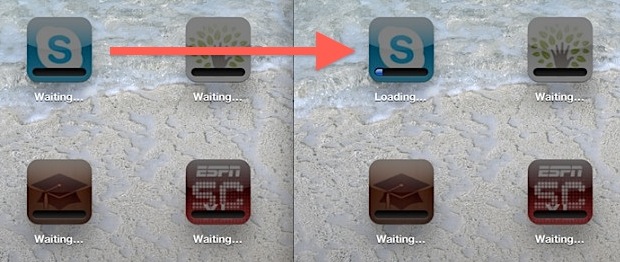
If you’re trying to install or download a handful of iOS apps, sometimes an app or even your entire home screen is filled with app icons labeled “Waiting…”. Even worse, sometimes those apps stuck on “Waiting” can be without any of the progress bars moving, with a failure to complete downloading or installing.
Don’t sweat it, if your iPhone or iPad apps are renamed as “Waiting” and they are stuck in that status, you can fix this fairly easily with the two methods detailed below.
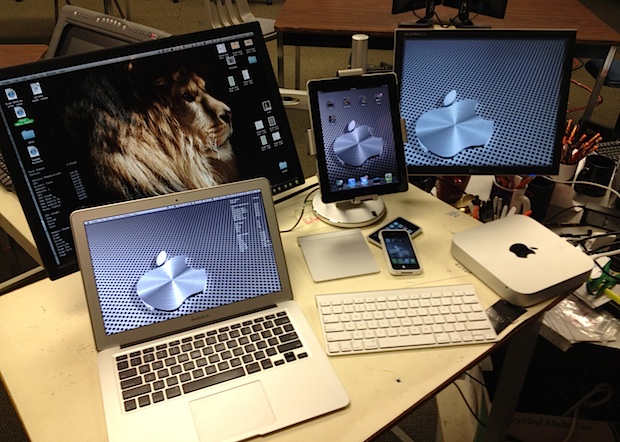
This Mac setup comes to us from Barry L, a high school computer science teacher in South Carolina. The Apple gear is used to teach AP Computer Science, Computer Programming, and Computer Science Research, and the classroom is gradually converting to Macs from a bunch of Dells running Windows XP, which will then be used to teach a class on iOS development this Fall. How awesome is that?
The hardware shown is split between the teachers personal gear and the schools, here’s what is on display:
Mac Mini (2011) with 8GB RAM connected to two displays
Dell 21″ LCD
LG 19″ LCD mirrored to 19 other displays around the room to show code
MacBook Air 13″ with 256GB SSD
iPad 2 32GB Wi-Fi
iPhone 4S 32GB
iPod touch 4th gen used for development
Apple Wireless Keyboard and Magic Trackpad
What you can’t see behind the desk is the the remainder of the classrooms gear, which are the aforementioned Dell workstations, a 21″ iMac (2011), two Mac Minis (2011), MacBook Pro (2010), MacBook Pro (2009), and two more iPod touch.
I don’t know about anyone else, but I think it’s pretty great that iOS development, let alone computer science, is being taught in a high school. The only computer class at my high school was a generic “keyboarding” course which focused on how to type (ooh!) and use MS Office (ahh!), talk about boring.
Enjoy reading our Mac setup posts? Want yours featured? Send in pictures of your Apple & Mac setups to osxdailycom@gmail.com and include some brief hardware details and what it’s used for.
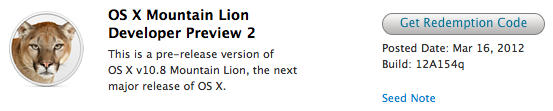
Apple has released OS X Mountain Lion Developer Preview 2. The new build is 12A154q, available to registered Mac developers via a redemption code exclusively through the Mac App Store. Presumably, the focus of Developer Preview 2 is bug fixes, and no new features are yet known.
OS X Mountain Lion will be released to the public this summer, and includes a AirPlay Mirroring, iMessages for Mac, Notification Center, Game Center, further iCloud integration, and a variety of other changes and refinements to Mac OS X. If you’re not a developer, you can get a lot of the Mountain Lion features in OS X Lion right now by combing third party tools and apps.
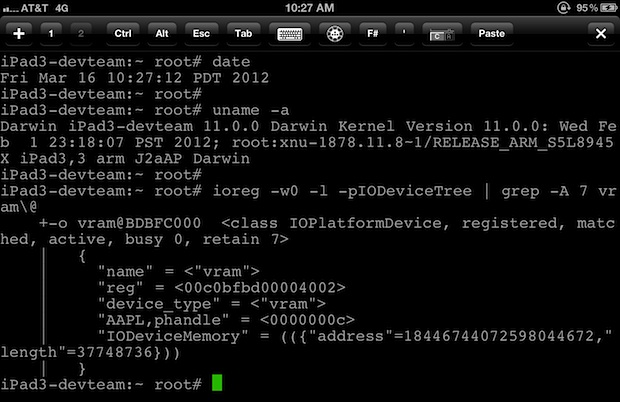
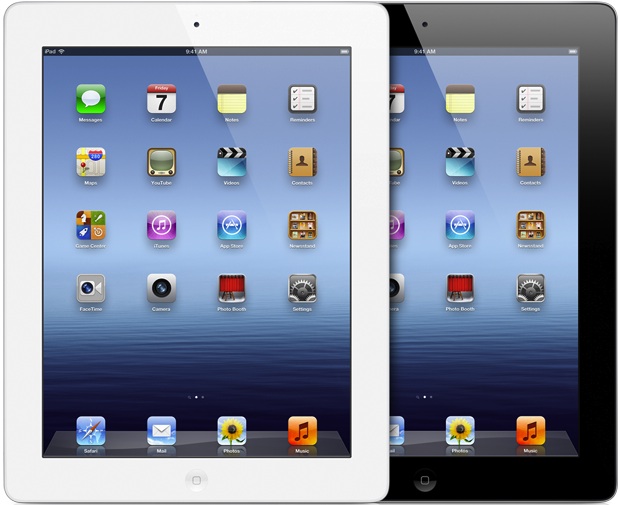
The new iPad 3 is barely getting into peoples hands but has already been jailbroken by renowned hacker @MuscleNerd (BTW, you can follow us on Twitter too). At this point, it’s more a proof of concept and MuscleNerd cautions it’s “Just a first step, still lots of work to do!”
There is no estimate on when the iPad 3 jailbreak will be publicly available, though typically things move quick from discovery to release. Because the iPad 3 shares a similar processor to the iPhone 4S and iPad 2, it’s quite likely those two devices will become jailbroken along the way. Assuming things go well, it’s possible some variation of an iOS 5.1 jailbreak for A5 devices will become available within a week or two.
You can create ISO images from any source disk or data by using the command line in Mac OS X. This isn’t too different than burning them through Terminal, and you can use either the hdiutil tool or dd command.
While the command line is generally reserved for advanced users, using it to create ISO’s isn’t too complicated and will save you the hassle of having to download any third party apps. If you’re new to the Terminal, remember that dragging & dropping files into the Terminal window will print their full path, making it easy to point to source files and preventing any navigation through the command line. Read more »
Is Personal Hotspot suddenly missing from iPhone after you installed an iOS update? We’ve heard from a few readers in our comments and through emails that after updating iOS their Personal Hotspot disappeared on the iPhone.
The reason for this happening is unclear, but thankfully the fix to bring back Personal Hotspot is usually extremely easy. Read more »
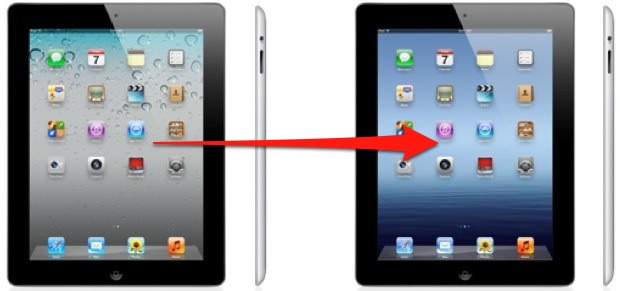
So you just upgraded to a new iPad, and you want to move all of your apps, pictures, settings, and data from an old iPad to the new iPad, right? Doing this is easy, you can go the post-PC route with iCloud (recommended), or the old fashioned way with iTunes, we’ll show you both.
Transfer Data from Old to New iPad with iCloud
Using iCloud is by far the easiest method, but you’ll obviously need to have iCloud set up and configured for this to work. This is the post-PC method, you won’t need to use a computer at all.
From the Old iPad
Launch “Settings” and tap on iCloud, then tap on “Storage & Backup”
Tap on “Back Up Now” to initiate a manual iCloud back up
Let the backup finish and then leave the old iPad alone
Your work on the old iPad is finished, now pick up the brand new iPad and turn it on.
From the New iPad
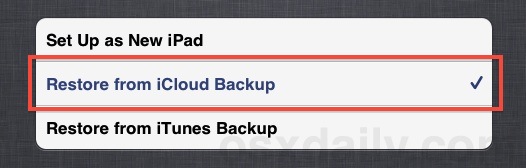
At the “Set Up iPad” screen, choose “Restore from iCloud Backup” and tap “Next”
Login to your iCloud account and choose the most recent backup from the old iPad you just made
Tap on “Restore” to transfer the data from the old iPad backup to the new iPad
How long the transfer takes depends on how much stuff you keep on the iPad and how fast your internet connection is. Just let the process complete and don’t interrupt it or lose the wifi connection.
Move an Old iPad a New iPad with iTunes
You can also migrate an old iPad to a new iPad with the help of iTunes. This is the old fashioned way since it requires hooking up the iPads to a computer, but it works just fine if you don’t have iCloud or you aren’t on a fast internet connection. These instructions are the same for Mac OS X or Windows.
With the Old iPad
Launch iTunes and connect the old iPad to the computer
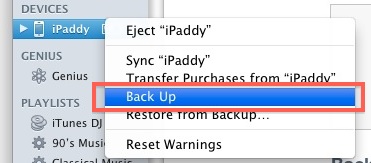
Right-click the iPad in the iTunes sidebar and choose “Back Up”
Let the iPad backup finish within iTunes, keep iTunes open but disconnect the old iPad from the computer
With the New iPad
Turn the new iPad on and at the “Set Up iPad” screen choose “Restore from iTunes Backup” then tap “Next”
Connect the iPad to the computer and within iTunes choose the most recent backup from the restore menu
Click “Continue” and let the restore via iTunes take place, do not disconnect the iPad until the transfer is completed and the iPad has rebooted
Restoring from iTunes may actually be quicker than restoring from iCloud, depending on the size of your backups and the speed of the internet connection. Even so, migrating with iCloud is the easiest and thus what is most recommended.
Note: If you already set up the new iPad, you can easily return to the original set up and configuration screen required for the transfer by tapping from Settings > General > Reset > Erase All Content and Settings, this will reset any iOS device to factory defaults. This erases everything on the iPad, so only do this if you are certain.
Walmart was listed in our “where to buy a new iPad” post as a good place to get the third gen iPad, but today they sent out an email to several sites stating they will actually start selling the hotly anticipated device tonight at 12:01AM local time. This means if you want to beat the morning lines at Apple Stores and don’t want to wait a few weeks for a delivery, spending your evening at Walmart may be the best bet.
We confirmed the sale by calling around to a handful of Walmarts in various western states and all but a few stores confirmed the midnight offering, though they either didn’t know or wouldn’t specify which models were to be available other than “black and white” colors. We were told stocks ranging from 15 to 25 units on hand, though many stores were mum on details and some said they weren’t allowed to say.
Here’s the original email quote from Walmart, courtesy of MacRumors:
If you want to be the first person amongst your friends and colleagues to have the new iPad, you will need to head to your local Walmart. Starting at 12:01 a.m. local time on March 16, a limited supply of the new iPad will be available at your local 24-hour Walmart. Other retailers’ doors don’t open until 8 a.m. local time, so you can get to work on time and beat the rush by coming to Walmart.
You can find a local 24 hour Walmart using their store locator, though it may be worth calling ahead to confirm the sale is on and that units are in stock. Good luck!
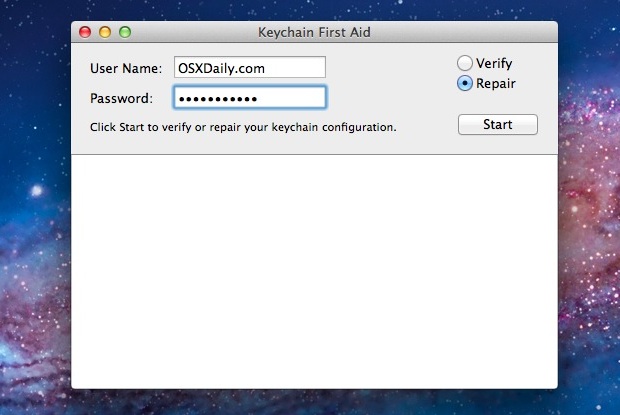
Is Safari no longer remembering logins and passwords? Is Mail.app asking for a password every time you launch the app and try to check or send mail, despite the fact that you’ve entered login credentials over and over? When a Mac app no longer remembers password and login data, it’s often the result of corrupted keychain files. This is easy to fix in three easy steps with Keychain Access first aid. Read more »
Gamers rejoice! Diablo 3, the highly anticipated action role-playing game, will be released on May 15 for both Mac and PC. Blizzard Entertainment has had the game in development seemingly forever (2001!), but it appears the long wait has been worth it. Gameplay is a mixture of dungeon crawling and hack-and-slash with RPG elements, there are five different character classes each with their own skillset, and there’s also a multiplayer PvP mode.
The expectations for Diablo 3 are quite high, but looking at gameplay videos and screen shots don’t disappoint with it’s gorgeous graphics and action packed style. This could easily wind up being the best major game release for the Mac platform this year, and gamers of all types should be anxiously awaiting it’s release.
Blizzard has a great record of releasing games simultaneously for both Mac OS X and Windows platforms, making it one of a few larger game companies to prioritize the Mac as an initial release platform.
Diablo 3 will cost $59.99 and can be pre-ordered and even pre-downloaded directly from Blizzard via BattleNet.
Early reviews of the new third generation iPad are starting to appear and they’re all pretty much glowing. Whether you’re still trying to figure out which model to get and where to buy one or you just want to pass the time until the FedEx truck arrives this Friday, take a peak at a handful of reviews below.
Let’s be clear: the new iPad is in a class by itself, just as its predecessor was. As the latest product in a lineage of devices that defined this category, the iPad continues to stand head and shoulders above the competition. With the addition of the Retina display, LTE, more memory, and a more powerful CPU, Apple has absolutely held onto the iPad’s market position as the dominant player and product to beat.
…The new iPad is the most functional, usable, and beautiful tablet that any company has ever produced.
If you’re at all interested in LTE in an Apple product, obviously, get a new iPad. If you read a lot on your iPad, get the new iPad. If you take a lot of photos and videos (yeah you, the joker in the front row of the concert with your iPad in the air), get the new iPad. If you play a lot of games on the iPad, get the new iPad.
If you don’t yet have an iPad, get the new iPad.
Telegraph loves the screen and proclaims it the best tablet on the market:
If you have been holding off getting a tablet then this is the one to go for. In my view, it’s the best that money can buy. Existing iPad owners who are thinking of upgrading should take a look at this new device. You’ll see the difference very, very clearly indeed.
The retina display is amazing, everything in the UI feels faster, and the price points remain the same. What’s not to love? It’s that simple.
New York Times provides the most critical review, though it’s still overall positive:
The new iPad doesn’t introduce anything that we haven’t seen before, either in the iPhone or in rival tablets. There’s no Steve Jobs “one more thing” moment here; Apple just took its white-hot iPad and added the latest screen, battery and cellular technologies.
MacWorld suggests users of the iPad 2 will be fine without upgrading, as long as they don’t see the new Retina screen:
The new iPad is just that: The iPad, updated for a new year and millions of new iPad users. It’s not smaller or lighter, but it’s got a remarkable screen, a much better rear camera, and support for cellular networking that can run at Wi-Fi speeds. It’s the iPad that millions of people have embraced, only one year better.
Users of the iPad 2 shouldn’t fret: Their iPad investment is certainly good for another year. But they might not want to look too closely at the new iPad’s screen. Once you get a load of that Retina display, it’s hard to go back to anything else.
Ever been away from your Mac and wished you could put it to sleep remotely? Maybe you accidentally left a Mac on at home or at work, or maybe you just left a Mac running so a download could complete. You don’t have to leave it running while you’re gone though, here are two different ways you can remotely sleep a Mac.
We’ll cover two methods to remotely put a Mac to sleep from anywhere. The first method uses SSH and thus requires Terminal access, and the other uses just email which allows you to sleep a Mac with an iPhone or iPad just by sending a message from a verified email address.
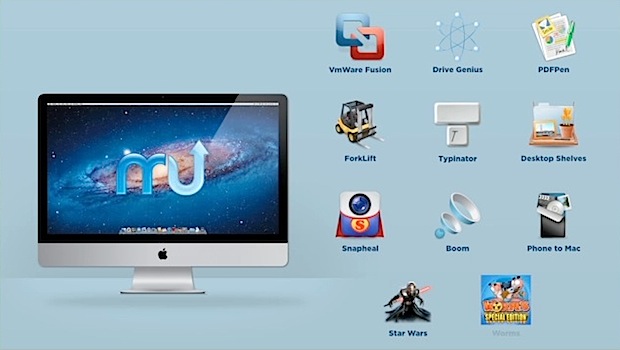
MacUpdate has announced their Spring bundle for 2012, offering a great selection of 11 Mac apps for $49.99. The price for the bundle if each app was purchased separately is $378, so buying the pack is a great way to save some money on a solid collection of Mac software. Apps included are:
VMWare Fusion 4 – the easiest and fastest way to run Windows on a Mac
DriveGenius 3 – Disk optimization utility, includes defrag, drive health monitoring, and more
PDFPen 5 – PDF editing tool to add text, images, signatures, and more
ForkLift 2.5 – FTP client and file manager
Typinator 5 – Text expansion and substitution to make typing faster
DesktopShelves 2 – Creates virtual shelves on the Mac desktop to reduce clutter
Snapheal – Photo retouching app
Boom – Boost the system volume output of a Mac beyond what OS X allows
Phone to Mac – Easy Mac-to-iOS transfer utility with drag & drop support
Star Wars: The Force Unleashed – Action-adventure game set in the Star Wars universe
Worms: Special Edition – Classic strategy game
Head on over to MacUpdate to read more about each app, check out some demos, or to buy the bundle. Video showing off the apps is below.
Update 3/15/2012: Walmart will begin selling the new iPad tonight at midnight, 12:01AM local time. We confirmed this with several Walmart stores, each apparently has about 15-25 units on hand.
The new iPad will be released this Friday at 8AM. As usual with a new iPad or iPhone release, you can expect to see some pretty major lines and it’ll be tough to get your hands on one if you didn’t pre-order. Knowing who is carrying the device and where they are will increase your odds of grabbing an iPad early, though don’t be surprised if they all sell out quickly.
iPad 3 Retailers
Apple Store – Opens at 8AM. Guaranteed to have the most stock and widest model variety of new iPads, but almost certain to sell out within a short amount of time every morning. Your best bet is to get there early and wait in line, with a little patience in the morning you’ll probably get your hands on an iPad 3 sooner than later.
Best Buy – Usually opens at 10AM, but you’ll want to confirm with your local store beforehand to insure that you arrive early enough to get one. Expect Best Buy to sell out quick.
Radio Shack – Typically opens at 9AM, verify your local store. Radio Shack is a lesser known iPad retailer and so you may be able to get one on launch day if you’re quick. Don’t expect large stock in the earlier days though.
Target – A traditionally reliable source of new iPads if you move quick. They open at 8AM and even have a reliable stock indicator on their website. Expect sell outs.
Walmart – Because the average Walmart customer is less tech-conscious, Walmarts often have a fairly good record of having a few iPads in stock. You will almost certainly see lines during the initial availability periods though, and more rural stores may not get iPads on launch day at all.
Sam’s Club – Same story as Walmart means a potentially higher likelihood of getting an iPad quickly, the downside is that you need a membership to shop at Sams
AT&T Store – If you’re in the market exclusively for an iPad 4G LTE on AT&T, aiming to be at an AT&T store when they open gives you a fairly decent chance of buying one. Expect sell outs.
Verizon Store – Verizon is known for having a large 4G coverage area, so if this is that is the iPad you want, heading to a Verizon Wireless store early in the morning just may be enough to get your hands on one
Traditionally, retailers get significantly fewer iPads than the Apple Stores do, and often in fewer model choices. If you aren’t picky about which iPad 3 you buy, any store that you can get to early should work. Just be aware you may only have 32GB White models, or 16GB Black 4G, or 64GB Wi-Fi, or some other slim variety of models to choose from. The widest variety of choices are almost always at Apple Stores this early in the buying cycle. Plan accordingly, and remember that other than the storage capacity and wi-fi/4G ability, the features and specs of each iPad 3 are the same.
Alternate Places to Buy New iPad
Craigslist – If all the local stores are sold out and you absolutely must get your hands on an iPad 3 right away, Craigslist works. Expect to pay inflated prices to cover the cost of whoever spent time waiting in a line somewhere, it’s not unusual to see a $100-$200 markup.
eBay – Similar markup to Craigslist, but you’ll have to wait until it’s shipped to you. Buying on eBay doesn’t make a whole lot of sense unless you are in a country that has a stronger currency and doesn’t have the iPad 3 near release day
Don’t Mind Waiting? Buy Online from Apple
Order Online from Apple – All early availability sold out quick, and there is currently a 2-3 week delay for shipment on new orders. Nonetheless, if you don’t mind waiting a couple weeks and you don’t want to wait in line somewhere or pay an inflated rate on the resale market, buying online from Apple is a no brainer.
If you’ve ever had to explain to someone that iPhone visual voicemail does not literally mean video voicemail, you know the potential disappointment that comes with it. What the user probably envisioned was the ability to record a quick video message and leave that as a video voicemail for the recipient to watch when they receive it. But it turns out that the iPhone can send video messages, they just aren’t going to be labeled as voicemail or sent through FaceTime, and in some ways this makes them even more flexible.
Sending Video Messages from iOS
Here’s how to record and send a video message from the iPhone, iPad, or iPod touch:
Launch the Camera app
Tap the camera switch button to toggle the front-facing camera
Slide the camera mode from picture to video in the lower right corner
Press the red button at the bottom to start recording a video message, keep it around 30 seconds or less, and hit the stop when finished
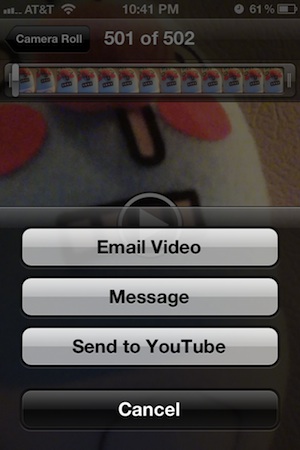
Tap the thumbnail in the lower left corner to bring up the camera/video roll with the most recently recorded video
Tap on the square arrow icon and select either “Email Video” or “Message”
Fill out the email or message as usual, specify a recipient, and tap send
From the receiving users perspective, using “Message” will act closer to what a video voicemail may be like, with the recipient getting a notification alert informing them a video has arrived. These come in like a standard MMS, though there’s a small video icon in the lower corner to demonstrate that it’s a movie, and when tapped it plays the video. This is best with iMessage, so be sure iMessage is set up and configured for all users to get the best results.
You can use email as well, though the video message will just be lost in their standard emails and it won’t arrive as a thumbnailed alert as the messages protocol does.
Is this video voicemail? Not quite, but it’s pretty close. Hopefully a future version of FaceTime will allow for video answering machines and voicemail boxes, but until then, using iMessage gets the job done and should satisfy most users.
MKV files are usually high quality videos compressed within a Mastroska container format. Typically you’ll encounter these with Bluray rips or video exported from an HD stream, and you might have discovered they won’t open in a standard movie player app. Not to worry though, MKV files can be played on a Mac easily, you just need to download a free application or codec that supports playing the high quality video format.
The most straight forward way to burn an ISO from a Mac is using Disk Utility, but you can also burn ISO’s and disk images directly from the command line with the help of a tool called ‘dd’. This works for Mac OS X and Linux, but we’re going to be focusing on the Mac here.
This dd burn function will work to burn an ISO to any target volume, be it a disc, hard drive, USB drive, memory card, DVD, or whatever other media you point it at.

 You can create ISO images from any source disk or data by using the command line in Mac OS X. This isn’t too different than







 The most straight forward way to