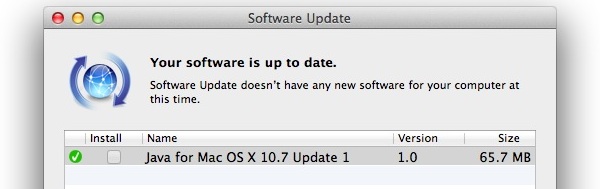
Apple has pushed out a Java update for Mac OS X 10.7 and 10.6 users, the download weighs in between 65-75 MB and includes a variety of performance enhancements, bug fixes, and security updates. No reboot is required for installing the update.
You can grab the update from the Apple menu’s “Software Update” or through a direct download from Apple’s servers. The direct download links below are for the Java update for both Mac OS X 10.7 and 10.6 in .dmg format:
You can now delete songs directly from the Music app on your iPad, iPhone, or iPod touch. The music removal action is achieved directly on the iOS device without having to re-sync to iTunes, allowing you to rapidly clear out music or songs you don’t want stored on the device.
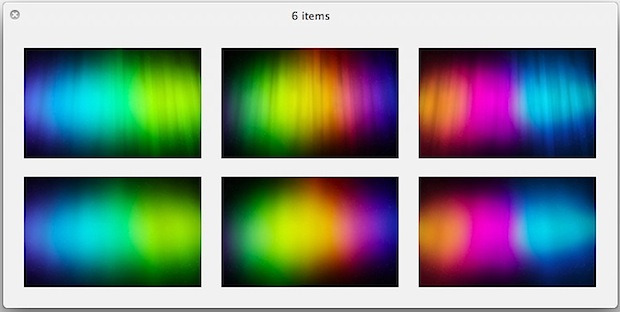
Looking for a few more gorgeous wallpapers for your desktop? This pack of colorful aurora themed images should do the trick, with two variations of each image, one with a Windows 7ish aurora stripey look and the other a blurred faint aurora more reminiscent of OS X. They all look great, and with the 2560×1600 resolution they should fit just about any screen size you’re working with.
The wallpaper pack is hosted on DeviantArt, if you’re having trouble finding their download link it’s highlighted clearly below in an image, just look on the right side of the DA page.
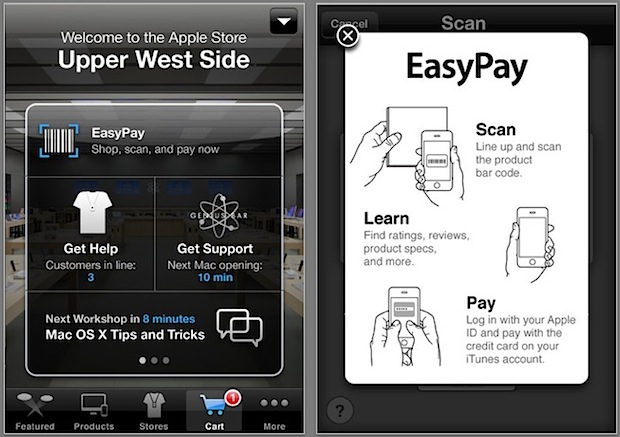
If you’re in a hurry, visiting a busy Apple Store for a quick purchase can be the worst part of the experience. With all the store reps tied up with other customers, you can just sit around waiting aimlessly to buy something you already know you want. Apple’s newly updated Store app aims to reduce that wait time, by allowing you to pre-order Apple products for quick in-store pickup, and with some other items, just buy them outright from your iPhone via the apps self checkout EasyPay option, skipping the lines completely.
Install the app on your iPhone, and with eligible store items you use the iPhones camera to scan the bar code and pay directly from your own iPhone with a credit card, no interaction with store personnel is required. Pay and you’re on your way.
For those wondering, the EasyPay portion of the app requires an iPhone 4 or newer due to the higher resolution of the camera used for scanning barcodes.
Here’s the official feature list via the iTunes App Store:
– Buy products on the go and pick them up at your favorite Apple Retail Store, or have them shipped to your door.
– Personalize an iPad or an iPod with free engraving, plus get signature gift wrapping for select Apple products.
– Buy an iPhone with just a few taps.
– While in an Apple Store, quickly purchase accessories on your own with EasyPay (requires iPhone 4 or iPhone 4S)
– Request help, check in for reservations, and meet up with a Specialist at the store.
– Make Genius Bar and One to One reservations and sign up for workshops and events.
This is a pretty great app for anyone in a time crunch (or for the agoraphobic), hopefully Apple expands the purchasable items list to include even more products.
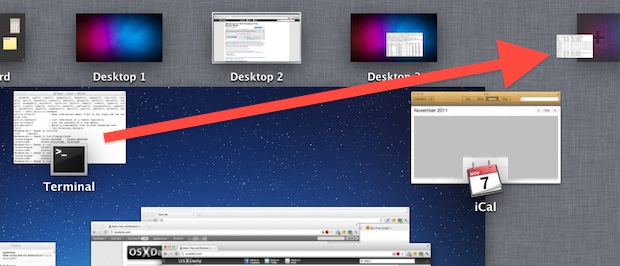
Using Mission Control on the Mac, you can quickly create a new Desktop Space just by grabbing an app from the Mission Control window, and then dragging the window into the corner, then letting it go on the “+” plus icon.
This will instantly generate a new desktop space, or a virtual desktop, with that app or window you dragged and dropped onto the plus icon.
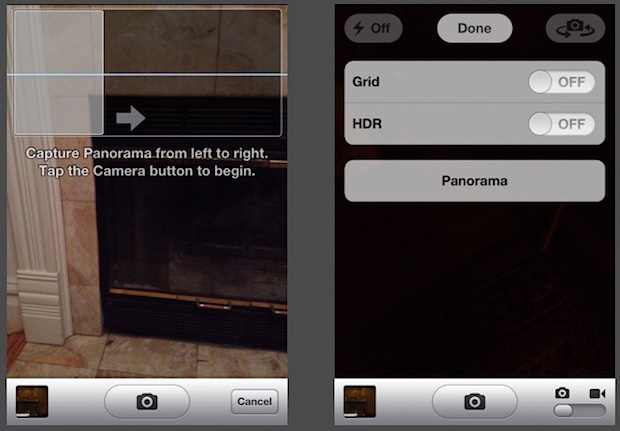
A hidden panoramic photo mode has been discovered in currently shipping builds of iOS 5 by an iPhone developer. The panorama option is enabled by adjusting a plist file in the Camera.app, but making modifications to plist files in iOS requires a jailbreak.
After the com.apple.mobileslideshow.plist file has been modified by setting ‘EnableFirebreak’ to YES, the Camera app shows the panorama option and will take and create panoramic images which can then be saved or sent just like any other image.
The discovery was made by @conradev and @chpwn on Twitter, who both posted individual photos demonstrating the user interface and resulting images (shown above).
The panoramic camera option will be available to current iOS 5 jailbreakers through the Cydia store shortly with an app called Firebreak, but for those who aren’t interested in jailbreaks the discovery indicates that Apple is likely working to bring such a feature to future versions of iOS and the iPhone’s camera app.
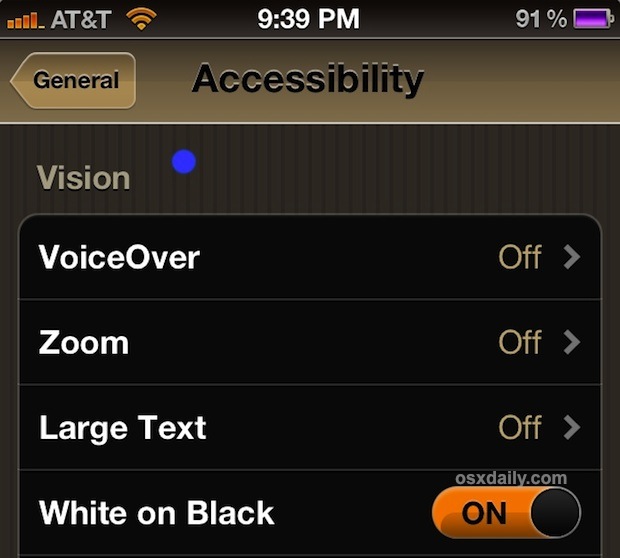
If you’re like me you end up reading a fair amount while laying in bed using an iOS device. If you read in the dark, you can give your eyes a rest by turning on a little known Accessibility feature that inverts the display of the iPhone, iPad, or iPod touch to show white text against a black background rather than the default setting.
Inverting the screen colors basically reverses every screen color on the display to be it’s opposite. White becomes black, black becomes white, blue becomes orange, and so on. The net effect is sort of like a dark-mode or night-mode, since much of the iOS screen colors are bright, and by inverting them everything gets darker.
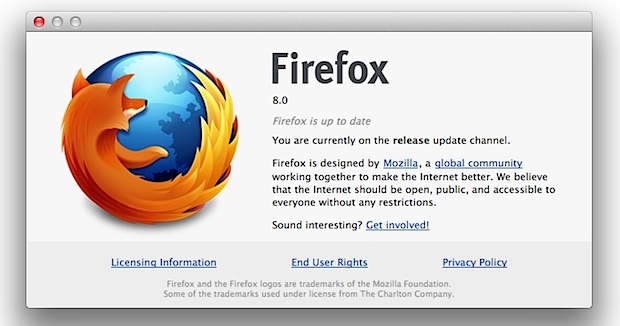
In the never-ending quest to make version numbers irrelevant, Firefox 8 has been released. Technically it’s not supposed to be out until tomorrow, but as with past Firefox releases, the download was pushed early to the Mozilla public FTP servers and is widely available for anyone to pick up for each supported platform (Mac, Windows, Linux).
Features of Firefox 8 include Twitter search integration, improved HTML5 support, better extension/plugin security, and some tab improvements that I couldn’t identify. When you first launch Firefox 8 you’ll encounter the new add-on manager, which checks to make sure you installed the add-ons and not a third party. You’ll also notice that the default Firefox page seems to think it’s a beta version, but when you check the version number it’s 8.0. Firefox 8 feels a bit faster too, particularly when loading from cache.
Download Firefox 8 Now
Mac OS X, Windows, and Linux versions are available, these are direct download links:
Mac OS X Lion users may be disappointed to discover that true Full Screen support is still absent in this release. You can enter into their own baked version of full screen mode with Command+Shift+F, but there is no full screen button in the upper right corner until you’re already in, and the overall approach Firefox takes feels sloppy compared to Safari, Chrome, or any other OS X Lion apps handling of full screen mode. This leaves Firefox as the only remaining popular Mac browser that hasn’t adopted full Lion feature support, but I’m sure it’ll come eventually.
Exciting news for those who like to jailbreak the iPhone and iPad, a Dev Team member has discovered a bug that will allow for an untethered iOS 5 jailbreak. No time estimate has been given by @pod2g, but he cautioned on Twitter not to expect a release soon, although he is actively working on the jailbreak.
There is a jailbreak for iOS 5 available right now but it is limited to a tethered experience. You can read about the difference between tethered and untethered jailbreaks but the simple answer is that an untethered jailbreak is always preferential because it does not require the iOS device to be connected to a computer during boot. This means you can reboot an iPhone or iPad on the go and have full access to all applications, whereas a tether won’t without the assisted boot procedure.
There is a so-called “semi-tether” jailbreak available for iOS 5 right now, and while it’s better than nothing it’s still fairly limited in that it requires a tethered boot for full device and app usage.
Safari has a hidden “Debug” menu that offers some additional features for debugging the browser, including stress and load tests, sampling, javascript error logging, the ability to intentionally crash a page, and more. Intended for Safari developers, the Debug menu is different from the Developer menu, which is geared more at web developers, although there are a few options in the Debug menu that general web developers would find useful as well, notably advanced cache choices and CSS animation controls. If this sounds confusing, just enable both of them and poke around and you’ll quickly see the differences.
Here’s how to enable the hidden Debug menu in Safari for Mac OS X with the assistance of a defaults command string in the terminal.
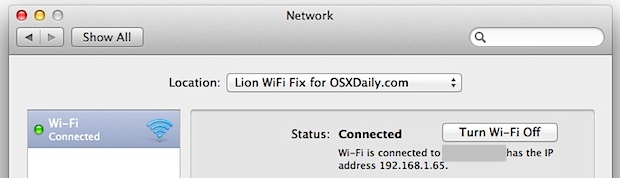
We’ve published a variety of fixes for wireless connections dropping in Lion, and even a keepalive script that helps many users maintain a connection in some of the stubborn cases, but some Mac OS X Lion users continue to have problems with their internet connection failing. After diagnosing another MacBook with wireless stability problems post-Lion, I found a solution that hasn’t failed yet and doesn’t require any of the other tips.
Before proceeding, make sure you have done the following:
Be sure you are running the latest version of Mac OS X ( get 10.7.2+)
Apply all available system and software updates available to your Mac from Apple menu > Software Update
Reset the WiFi Router
After you’re positive you’re on the newest version of OS X and have all software updates applied to the Mac in question, proceed with the solution:
Add a New Network Location & Renew DHCP Lease
Launch “System Preferences” from the Apple menu
Select the “Network” panel
Click on the “Location” pull down menu and choose “Edit Locations…”
Click on the + plus icon to add a new network location, give it a unique name, and click “Done”
Back at the Network panel with the newly created location selected, click on “Advanced” in the bottom right corner
Click on the “TCP/IP” tab
Click on “Renew DHCP Lease” and wait for the numbers on the left to repopulate, then click “OK”
You should now have a stable wireless connection under Mac OS X Lion 10.7.2.
For most users the wifi stability issue was resolved with installing the latest OS X Lion updates, but in some cases is seems that old network connection profiles brought the problem forward for to the newest OS update. You may have to enter the wireless network password again before you can connect to the router, if you don’t know that be sure to find it out from someone who does before troubleshooting with this tip.
Did this work for you? Let us know in the comments.
Once you have iCloud set up, it becomes easier than ever to keep recent backups of your iPhone and iPad. With iCloud backup enabled, remember that the backup starts automatically any time the device is connected to a power source, and the synced computer is turned on and connected to the same wifi network. These automatic backups are great, but if you want to be absolutely certain you have the most recent backup stored in iCloud before you do something like an iOS restore, software update, or even a jailbreak, you’ll probably want to do a manual backup first.
Manual backups are also highly recommended to use on a regular basis if you don’t use the automatic backup feature, because otherwise you won’t have a backup of your device stored anywhere.
We’ve received quite a few questions about the iPhone’s clock and if it will update automatically for Daylight Savings Time, the answer is: Yes, the iPhone automatically changes time to be correct with your time zone. So does the iPad, iPod touch, and Mac OS X. You do not need to change the time manually, it will “fall back” on it’s own.
Most of the questions about daylight savings relate to past problems and bugs with iOS that caused improper clock adjustments for both the Spring and Fall time changes. The most recent bug occurred with the iPhone earlier in the year, when the clock went the wrong way or didn’t change at all. This was after the year prior had a different issue, where the alarm clock went off an hour later than it was set, and that carried further several days until the clock was manually reset.
These issues were resolved with past iOS updates and will not impact iOS 5 users, and there were no reports of issues with time changing in the UK last week. If you’re paranoid you can always set another alarm clock just to be safe, but it’s probably not necessary. Read more »
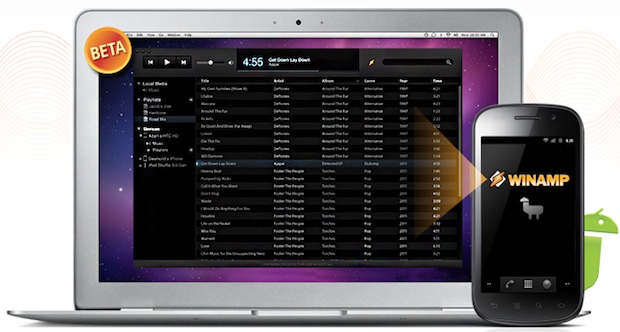
WinAmp, the longstanding Windows music player, has come to the Mac OS X platform and brings a few great features for Android users, most notably iTunes music syncing and library sharing, and Wi-Fi syncing. This means you can take any existing iTunes playlist and sync it directly to an Android device without having to jump through any other hoops.
The app is technically in beta but works well enough to use, with a very light memory and CPU footprint and an attractive enough user interface. If you’re an Android user that owns a Mac (or PC I suppose), this may be the best way to get your iTunes music library onto your Android phone.
Other than serving as an easy way to sync iTunes to Android, it also makes for a decent desktop music player if you’re averse to iTunes for whatever reason. Read more »
The iPhone and GPS-equipped iPad include a “Places” feature in the Photos app which allow you to see pictures based on geographical location. This works to show your own photos by location, and also photos that have been shared with you that you saved to your own Photos app Camera Roll.
Here is how to access these geolocation tagged pictures and the location photo browser from the iOS homescreen:
PBS/NOVA and WGBH Boston have posted a full 50 minute unedited interview with Steve Jobs from the TV miniseries “Machine That Changed The World”. The clip is from 1990 and demonstrates Steve Jobs’ remarkable visionary thinking, covering a wide variety of topics and technologies well before they became parts of our daily lives (keep in mind the internet was practically nonexistent to the general public then).
The TV miniseries aired in 1991 and offered an insiders look at the history of computers and the surrounding industry. The episode of Machine That Changed the World show featuring clips of the Jobs interview, in addition to interviews with Steve Wozniak, Mike Markkula, and a variety of other Silicon Valley veterans, is embedded below: Read more »
This reader submitted Mac setup comes from sound designer and musician Richard D, who may have one of the coolest seasonal offices I’ve seen. Ignoring the great view of the woods for a minute, the Apple gear is a MacBook Pro 15″ running Logic Studio alongside an iPad 2, in addition to a Magic Mouse and some other hardware.
When the weather accommodates, who wouldn’t want to work outside? Technically this is only halfway outdoors because it’s on a covered porch, but that makes it even more usable because it reduces potential screen glare. Not quite a boat or a motorcycle in the desert, but it’s probably a lot more functional than both of those.
Great Mac setup, thanks for sending this in Richard! You can send in your own setups to osxdailycom@gmail.com



 Exciting news for those who like to jailbreak the iPhone and iPad, a Dev Team member has discovered a bug that will allow for an untethered iOS 5 jailbreak. No time estimate has been given by @pod2g, but he cautioned on Twitter not to expect a release soon, although he is actively working on the jailbreak.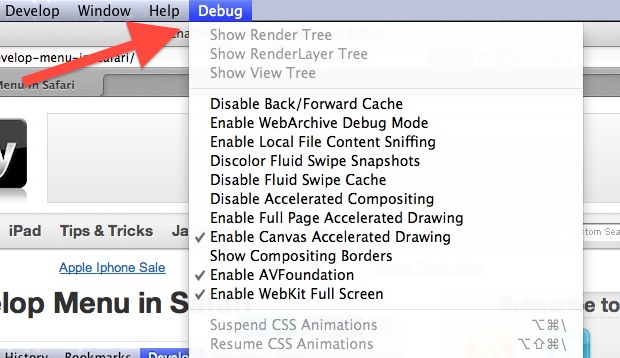

 Once you have
  We’ve received quite a few questions about the iPhone’s clock and if it will update automatically for Daylight Savings Time, the answer is: Yes, the iPhone automatically changes time to be correct with your time zone. So does the iPad, iPod touch, and Mac OS X. You do not need to change the time manually, it will “fall back” on it’s own.