Subscribe to OSXDaily

Subscribe to RSS Subscribe to Twitter Feed Follow on Facebook Subscribe to eMail Updates

Shared on Facebook

Shop at Amazon

Ad

OSXDaily on Facebook

Search Mac OS X 10.7

Maintain File Ownership & Permissions When Copying With Duplicate Exactly in OS X

Mar 10, 2012 - 4 Comments

Duplicate Exactly in Mac OS X

Mac OS X 10.7 and OS X 10.8 include a nice new ability to be able to duplicate and paste files exactly. Basically this means that if a file is owned by another user, Duplicate Exactly and Paste Exactly will preserve the files original ownership and permissions, rather than copy the file with the current user becoming the new owner.

Duplicate Exactly

Select a file or folder within the Finder and hit Command+Option+Shift+D to perform an exact duplication. You will be presented with a window to authenticate the copy to allow the ownership state to maintain consistency.

Maintain File Ownership with Duplicate Exactly in OS X

The duplicate will be placed alongside the original, maintaining ownership integrity.

Paste Exactly

Similarly, there is also a new feature that lets you Paste Exactly, maintaining the same ownership and permissions when using cut and paste in the OS X Finder. This is activated with Command+Shift+Option+V after a file or folder has already been placed in the clipboard buffer.

These two tips are geared for more advanced users and administrators who are altering another users files or directories. Try them out the next time you are editing another users files and save yourself a potential headache.

OS X 10.7.3 Supplemental Update Fixes Problems with Time Machine Backups

Mar 5, 2012 - 8 Comments

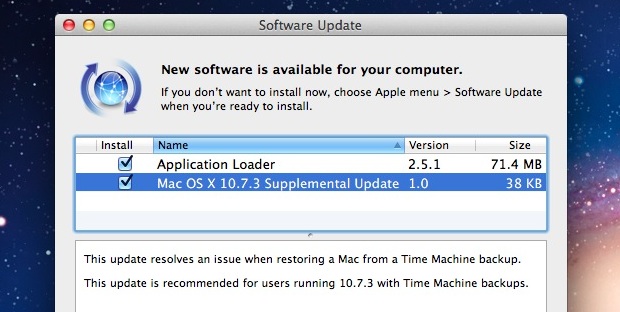
OS X 10.7.3 Supplemental Update

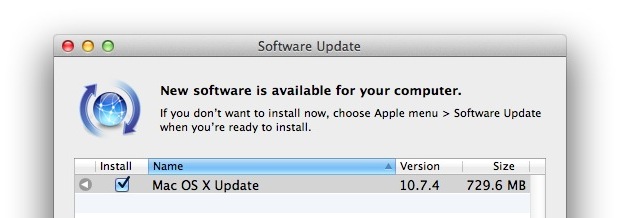
Apple has released a supplemental update to Mac OS X 10.7.3 to address a potential issue with restoring from Time Machine backups.

The update can be found from Software Update via the  Apple menu or downloaded directly from Apple. Installing the update does not require a reboot.

Despite being a minor update, it is good maintenance practice to keep Mac OS X software up to date and it’s recommended to download for all OS X Lion users who rely on Time Machine for backing up their Macs.

10 Ways to Get OS X Mountain Lion Features on your Mac Right Now

Mar 2, 2012 - 8 Comments

Get OS X Mountain Lion features right now

Can’t wait for OS X Mountain Lion to be released this summer? You can get many of the features of the next generation Mac OS X version right now. Whether you are running OS X Lion or to an extent, OS X Snow Leopard, read on to find out how to get everything from notifications, note syncing, synced reminders, iMessages, the simplified Safari UI, Twitter integration, AirPlay mirroring, and much more.

Read more »

Change (Spoof) a MAC Address in OS X Lion & OS X Mountain Lion

Mar 1, 2012 - 17 Comments

Change a MAC Address in Mac OS X

A MAC address is a unique identification number assigned to network interfaces, these can be attached to physical hardware like NIC and Wi-Fi cards or assigned to virtual machines. On some occasions, you’ll need to change a MAC address to another ID.

We’ve received a few questions about this recently because the process of changing (sometimes called spoofing) these addresses has changed slightly from version to version in Mac OS X. With that in mind, we will show you how to change a MAC address in the latest versions of OS X 10.7 and 10.8. Launch the Terminal found within /Applications/Utilities/ to get started.

Get a New MAC Address
The first thing you’ll want to do is retrieve the intended MAC address. If you have one in mind then use that, but if you aren’t trying to spoof a specific address and just need a random one, use the following command to generate one with openssl:

openssl rand -hex 6 | sed 's/\(..\)/\1:/g; s/.$//'

MAC addresses are always in the format of xx:xx:xx:xx:xx:xx, yours must conform to this format in order to work. For the purpose of this walkthrough the randomly generated address of “d4:33:a3:ed:f2:12 ” will be used.

Changing the MAC Address

If you aren’t in the Terminal yet, open it now. We’ll use the interface en0 for this, but yours could be en1 (read notes at bottom). The command for changing the MAC address is as follows:

sudo ifconfig en0 ether xx:xx:xx:xx:xx:xx

Replace “xx:xx:xx:xx:xx:xx” with the desired MAC address, in the example case this will look like:

sudo ifconfig en0 ether d4:33:a3:ed:f2:12

Hit return and enter the administrators password to set the new address. To confirm it has been changed, type the following:

ifconfig en0 |grep ether

You can also find it in Network preferences, though the GUI doesn’t always report the MAC change immediately, instead waiting until the network connection has been cycled.

Notes & Troubleshooting

  • If you aren’t sure which interface to use (en0, en1, etc), type “ifconfig” and find it that way. For MacBook Air without an ethernet port the en0 is usually the Wi-Fi interface, whereas a MacBook, iMac, Mac Mini, MacBook Pro, or any Mac that has an ethernet port will probably use en1 for Wi-Fi instead
  • You may want to note the default hardware MAC address before beginning
  • Some Macs will use the following command instead:

    sudo ifconfig en1 Wi-Fi xx:xx:xx:xx:xx:xx

    OS X Lion and later renamed ‘airport’ to Wi-Fi and thus the naming change

  • You will need access to an admin account or have the root user enabled
  • This has been tested on a MacBook Air and MacBook Pro running OS X 10.7 and OS X 10.8, older versions of OS X can go here

The whole process should take no more than 15 seconds or so, as demonstrated in this video:

Clear Versions History & Auto-Save Cache Data in Mac OS X

Feb 20, 2012 - 3 Comments

OS X Versions Cache and Auto-Save

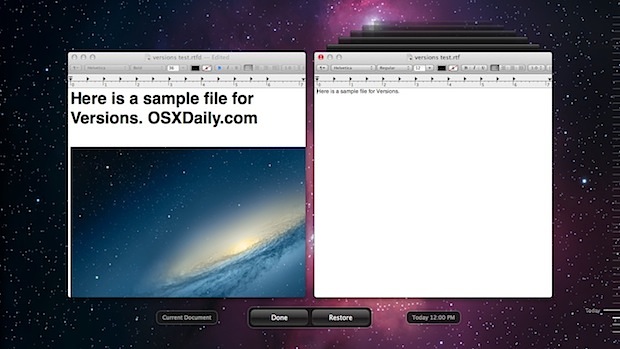
Mac OS X 10.7 and later include the Versions feature and Auto-Save ability, this lets users restore back to previous editions of a file by creating a constant sequence of saved file states while they are being worked on. All around, Versions and auto-save are useful, but they can also leave traces of sensitive documents and files you may not wish to keep around. Other than the privacy implications, this same technique can resolve some erroneous behavior with Versions as well. The simplest solution to these issues is to manually delete the Versions saved states cache directory.

The Versions cache directory is stored within the root of a Mac OS X installation here:

/.DocumentRevisions-V100/

The safest way to remove this folder will be multiple steps, so launch the Terminal (/Applications/Utilities/) and type the following:

cd /

To be certain you’re about to remove the proper directory, verify the directory name:

ls -l .DocumentRevisions-V100

Delete the directory and its contents with rm:

sudo rm -rf .DocumentRevisions-V100

Doing this one-time will not disable the feature, it will just remove all existing history of files that have been managed by Versions.

After a file has been processed automatically by Versions again, the directory will be rebuilt. Because this is involves editing system files and using the potentially catastrophic ‘rm -rf’ command, you shouldn’t use this tip unless you know what you’re doing and why you’re doing it.

Also, be aware that deleting the directory can cause some temporary issues with existing files that are locked or have saved states, even if file locking is turned off. Typically this will be in the form of an error message when using the file the first time, but it shouldn’t cause any serious issues.

Fix for Mac OS X Not Remembering Wireless Networks

Feb 15, 2012 - 13 Comments

Mac OS X Forgets Wireless Network

I recently encountered a strange issue where Mac OS X Lion stopped remembering a specific wireless network, forcing me to manually select the connection and then enter the password each time I wish to connect to that wireless router. This appears to be a common enough issue with wireless connectivity in OS X Lion and it usually occurs when waking from sleep or rebooting a Mac, which is followed up the connection failure. I came across the answer in the comments on a past Lion wi-fi issue article here on OSXDaily, and it resolved the troubles for me.

Before proceeding, I would recommend updating to Mac OS X 10.7.3, which also includes a bug fix to address some Lion Wi-Fi stability issues. That alone may resolve it for you, but continuing with the following solution won’t harm anything either way.

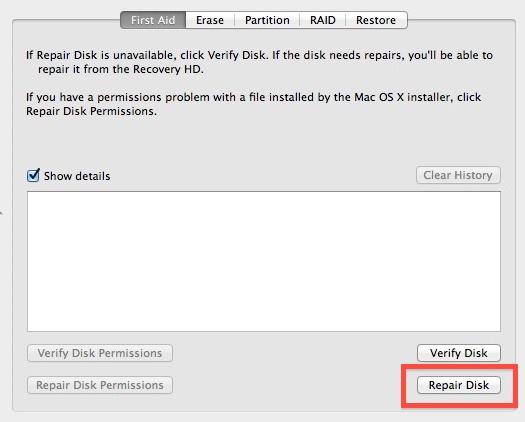
  1. Open the “Disk Utility” application, found within Applications > Utilities
  2. Select “Macintosh HD” from the lefthand side menu, then click on the “First Aid” tab on the right
  3. Click on “Repair Disk Permissions” and let this run, this may take 15 minutes or longer
  4. Repair permissions in Mac OS X

  5. Reboot the Mac
  6. Join the wireless network as usual, checking the “Remember this network” box

You should now be able to sleep and reboot the Mac without connection failures or forgetting the wireless network. This is one of those rare instances where repairing Disk Permissions, an oft referenced generic Mac placebo for many troubleshooting issues, actually does something and resolves the problem. Try it yourself and let us know if it worked for you.

If you continue to have wireless difficulties, check out a lengthy list of tips for fixing wireless problems in OS X Lion.

Set the Volume Level to a Hidden Ultra Low Setting in Mac OS X

Feb 15, 2012 - 9 Comments

Super quiet Mac audio volume setting

Mac OS X has a hidden super quiet volume setting that is somewhere between completely muted and the lowest volume level, here’s how to access it:

  • Use the Volume Decrease key (F10 or F11) until the volume is muted, signified by the volume graphic with a slash through it
  • Now press the Mute key (F9 or F10) to see the slash disappear and the volume level set at zero bars

The audio output level is now set at the super quiet setting, with sounds just barely audible enough that you can identify them. This is a perfect setting to couple with temporarily muting the boot sound for using a Mac in meetings, libraries, classrooms, or other places where silence is necessary, allowing you to continue to hear audio without distracting others.

Update: The precise keys vary depending on the Mac and Apple keyboard in use. Newer MacBook models may be F10 and F11 rather than F9 and F10, you may want to focus on the keys icons rather than the label instead to be sure.
Read more »

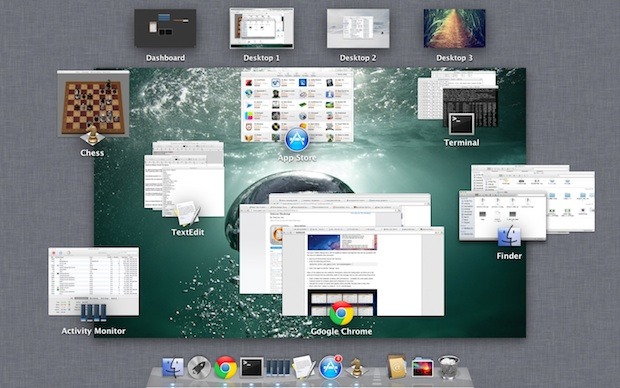
Speed Up Mission Control Animations in Mac OS X Lion

Feb 14, 2012 - 15 Comments

Speed Up Mission Control Animations

Boosting the speed of Mission Control animations can make Mac OS X Lion feel a bit faster when switching between windows, spaces, and apps within the feature. It’s easy to do and reversible if you decide you don’t like it, launch the Terminal to get started.

Speed Up Mission Control Animations

This will speed up Mission Control quite noticeably but still maintain a decent looking animation:

defaults write com.apple.dock expose-animation-duration -float 0.15

Now kill the Dock to restart Mission Control:

killall Dock

Do a three-fingered swipe up or down to see the difference in speed.

Super Fast Mission Control Animations
If you want extremely fast animations, this is your defaults write command:

defaults write com.apple.dock expose-animation-duration -float 0.1

Again, kill the Dock for changes to take effect:

killall Dock

As you may have guessed, you can adjust the animation speeds by changing the number after the -float flag, the larger the number the slower the animation, and the lower the number the faster the animation. The default setting is probably about 0.2 or 0.25, meaning anything larger than that starts to be slower than default. Whole numbers become increasingly slow, similar to holding down the shift key.

Slowing Down Mission Control Animations
This is marginally slower, but can quickly become a nuisance with usability:

defaults write com.apple.dock expose-animation-duration -float 1

Followed by:

killall Dock

Disable Mission Control Animations
This removes all animations, making Mission Control just snap in and out:

defaults write com.apple.dock expose-animation-duration -float 0

Killing the Dock is required for the animations to disappear:

killall Dock

The effect of disabling the animation is quite jarring and unless you’re trying to preserve frame rate for some reason it’s not very pleasant.

Return to Default Mission Control Animation Speeds

Want Mission Control to be back to normal? Use the following defaults command to clear any customizations, returning to the default setting:

defaults delete com.apple.dock expose-animation-duration; killall Dock

Check out more of our Misson Control tips.

Use a MacBook Air/Pro in Clamshell Mode with Mac OS X Lion

Feb 13, 2012 - 9 Comments

Clamshell Mode with MacBook Air

Using a portable Mac with the lid closed is frequently called clamshell mode, and using clamshell has been made easier than ever since the introduction of Mac OS X Lion. There are actually two different methods, the first is for using a MacBook closed lid with or without external input devices attached, and the second is for using clamshell mode with a wireless device like a Bluetooth keyboard and mouse.

Use a Mac in Clamshell Mode with OS X Lion

To get the most out of clamshell mode, you will want to have an external keyboard and mouse as well, but they are no longer necessary. Here’s how to use a closed lid MacBook Pro/Air in OS X Lion either with or without external input devices attached:

  • Attach the power adapter to the MacBook, MacBook Pro, or MacBook Air
  • With an external display connected to the Mac, close the lid

The screen will flicker blue briefly, then the external monitor will refresh and automatically be set as the primary display, moving your desktop, menu bar, and all other windows over to the attached screen.

Use Clamshell Mode in OS X Lion with a Wireless Keyboard & Mouse

The requirements for using a MacBook in clamshell with a wireless keyboard and mouse are basically the same, although you must configure an additional option in System Preferences. First you need to be sure the Bluetooth device is paired with the Mac (if you’re already using a wireless input device, it is), then proceed:

  • Launch System Preferences and click on “Bluetooth” pane
  • Click on “Advanced” in the lower right corner
  • Check the box next to “Allow Bluetooth devices to wake this computer”
  • Bluetooth wake from sleep option

  • Now connect the external display
  • Close the MacBook Air, MacBook Pro’s lid

If you want to get around the physical hardware connectivity requirements, use the NoSleep tool we mentioned recently which lets you run the Mac closed with no hardware attached at all.

Overall, using clamshell since OS X 10.7 is quite a bit easier than with prior versions of Mac OS X, when you had to either reboot or wake from sleep with an external display and mouse connected.

Thanks to Matt for the tip

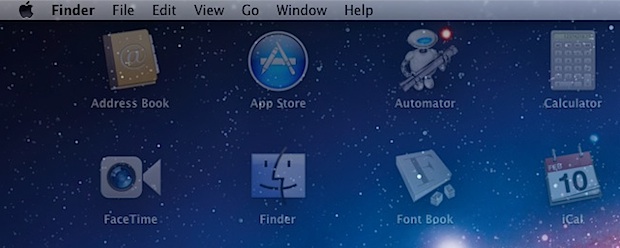
Disable Launchpad Fade Transition Effect in Mac OS X Lion

Feb 10, 2012 - 9 Comments

Launchpad Transition in Mac OS X Lion

Launchpad shows a fading transition anytime it is opened or closed, making for a nice effect over whatever is in the background. It’s pleasant looking, but if you don’t like it you can disable the fading with a few defaults write commands. You can also choose to disable only half of the transition, either for showing or hiding Launchpad.

Disable Launchpad Fading

Launch the Terminal and enter the following commands separately:

defaults write com.apple.dock springboard-show-duration -int 0
defaults write com.apple.dock springboard-hide-duration -int 0

Now you must kill the Dock so it relaunches with the changes:

killall Dock

Launchpad is a subprocess of the Dock so killing the Dock forces Launchpad to reload, and the change will be immediately noticeable when you open Launchpad again. Gone is the smooth transition, and now it’s a sudden switch, almost like changing desktops but without the side scrolling animation. If you only want to disable half of the effect, say for when Launchpad is being hidden, only use the defaults write command with “springboard-hide-duration” in the string.

Re-enable Launchpad Fading

To reenable fading and go back to the default OS X Lion setting, use the following commands:


defaults delete com.apple.dock springboard-show-duration

defaults delete com.apple.dock springboard-hide-duration

Again kill the Dock with:

killall Dock

Remove Launchpad Fade Effect

Launchpad will now be back to it’s usual self with the fading transitions. If you’re not certain, hold down the shift key and see if the transition is in slow motion.